
Guatemala
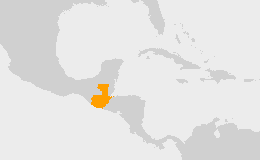
The ITUC affiliates in Guatemala are the Central General de Trabajadores de Guatemala (CGTG), the Confederación de Unidad Sindical de Guatemala (CUSG) and the Unión Sindical de Trabajadores de Guatemala (UNSITRAGUA).
Guatemala ratified Convention No. 87 on Freedom of Association and Protection of the Right to Organise (1948) in 1952 and Convention No. 98 on the Right to Organise and Collective Bargaining (1949) in 1952.
Legal
Freedom of association / Right to organise
Freedom of association
The right to freedom of association is enshrined in the Constitution.
The right to freedom of association is regulated by a Labour Code.
Anti-Union discrimination
The law prohibits anti-union discrimination, but does not provide adequate means of protection against it.
Barriers to the establishment of organisations
- Excessive representativity or minimum number of members required for the establishment of a union
- Unions must represent 50 per cent plus one of the workers in a sector in order to establish industry unions (Art. 215 (c) of the Labour Code)).
Restrictions on workers’ right to form and join organisations of their own choosing
- Restrictions on workers’ right to join the trade union of their choosing imposed by law (i.e. obligation to join a trade union of a certain level e.g. enterprise, industry and/or sector, regional and /or territorial national)
- Under the terms of section 3 of the Act concerning unionization and strike regulation for state workers and section 215 of the Labour Code, it is impossible for the same union to group together public servants and private-sector workers.
Restrictions on trade unions’ right to organise their administration
- Restrictions on the right to elect representatives and self-administer in full freedom
- To be elected as a union leader a person must be of Guatemalan origin and be employed by the company. (Arts. 220 and 223 of the Labour Code).
Right to collective bargaining
Right to collective bargaining
The right to collective bargaining is enshrined in the Constitution.
The right to collective bargaining is recognised by law.
Restrictions on the principle of free and voluntary bargaining
- Compulsory conciliation and / or binding arbitration procedure in the event of disputes during collective bargaining, other than in essential services
- There is provision for imposing compulsory arbitration in the event of a dispute in the public transport sector and in services related to fuel.
Undermining of the recourse to collective bargaining and his effectiveness
- Absence of appropriate mechanisms to encourage and promote machinery for collective bargaining
- In the public sector, there is no regulation of collective bargaining, leading to numerous disputes. The ILO Committee of Experts has repeatedly requested the Government to adopt, in consultation with the trade unions concerned collective bargaining procedures in the public sector.
Right to strike
Right to strike
The right to strike is enshrined in the Constitution.
The right to strike is regulated by a Labour Code.
Barriers to lawful strike actions
- Obligation to observe an excessive quorum or to obtain an excessive majority in a ballot to call a strike
- Workers are allowed to strike provided they have the support of 50 per cent plus one of the workers in the company (Art. 241 of the Labour Code).
- Compulsory recourse to arbitration, or to long and complex conciliation and mediation procedures prior to strike actions
- There is provision for imposing compulsory arbitration in the event of a dispute in the public transport sector and in services related to fuel.
Undermining of the recourse to strike actions or their effectiveness
- Excessive civil or penal sanctions for workers and unions involved in non-authorised strike actions
- Labour, civil or criminal sanctions can be imposed for strikes in the civil service or by workers in specific enterprises.
In practice
The Labour Ministry continues with its policy of setting excessive requirements for the registration of trade unions, including requirements that are not set out in the legislation.
During 2019, 59 applications were submitted to register new unions but only 19 were approved. One of the main reasons for this is that the Labour Ministry continues to impose complex prerequisites of dubious legality, which take a long time to meet, leading some to lose heart and to abandon the process. The road map sets out the need to remedy this, but as the Labour Ministry itself has stated, nothing has been done.
Point 7 of the road map states that in order to strengthen the rule of law in Guatemala, it is essential and urgent that labour court rulings be complied with and enforced. Yet again, no progress has been made on this point. The average number of unfulfilled rulings continues to be half of the total. In other words, despite court decisions in their favour, only half of the workers unfairly dismissed simply because they want to organise a union are in fact reinstated. No action has been taken by the Supreme Court of Justice to remedy the situation.
Furthermore, according to data presented to the Tripartite Commission, there are currently 3,054 cases of pre-trial proceedings against public officials for disobeying reinstatement orders and 1,900 have been certified by the Public Prosecutor’s Office. In other words, not only have the number of reinstatements not increased, as provided for under the road map but, in thousands of cases, public authorities are breaking the law by refusing to reinstate people who have been dismissed simply for exercising the constitutional right to organise within a union.
The Minister of the Interior and his team completely halted the work that had, at least officially, been launched in 2017 regarding the commitment to provide protection to trade union leaders under threat or at risk on account of their trade union activities. Interior Minister Enrique Degenhart in fact cancelled all the actions that had been set out for the agencies under his responsibility, most notably the National Civil Police (PNC), in the “Protocol for the Implementation of Immediate and Preventive Security Measures for Unionised Workers, Union Representatives, Leaders, Activists, and Persons Related to the Defence of Labour Rights, as well as the Physical Spaces where they Conduct their Activities”.
With regard to compliance with the ILO road map during 2019, investigations into the murders of trade unionists remained unresolved; the legal and institutional framework to protect workers from the crimes committed against them has not yet materialised; no progress has been made in the development of awareness and outreach campaigns on the right to freedom of association, and no tangible measures have been taken to ensure respect for workers’ rights.
The MSPAG (Movimiento Sindical y Popular Autónomo Guatemalteco), the CGTG (Central General de Trabajadores de Guatemala) and UNSITRAGUA (Unión Sindical de Trabajadores de Guatemala) jointly denounced the decline in the labour rights situation in Guatemala, as reflected by the virtual absence of investigations into the murders of trade unionists, the mass dismissals that take place after every change of district government, and the indecent wages paid to Guatemala’s workers.
In August 2019, municipal workers in Ciudad Vieja, Sacatepéquez, were intimidated by a so-called “organised civil society” group pushing for opposition to the organisation of the municipal union at a demonstration in front of the municipal hall. Some workers believe the anti-union movement was, in fact, organised by the mayor of the municipality.
Collective bargaining is still very limited in Guatemala. According to a report by the Ministry of Labour, only 14 collective agreements were approved in 2018, and only four in March 2019.
Edras Ezequiel de la Rosa Morales, a member of the Guatemalan Labour, Indigenous and Campesino Movement (MSICG), leader of the tele-secondary school workers’ union in Santa Rosa, the SINTRAT-SR, and president of the Community Development Council (COCODE) of the Caserío La Campesina community in the municipality of Taxisco (Santa Rosa department), left his home on 24 November 2018 after receiving a phone call. Not long after, his car was found abandoned. The trade unionist was found dead, inside the car, with bullet wounds on his legs and his throat slit. The motive for the crime remains unknown, but Edras Ezequiel de la Rosa Morales was a well-known leader of the tele-secondary school workers’ union, was very active in defending this type of schooling and had spoken out against the false employment contract policy pursued by the Education Ministry to avoid having to comply with labour rights.
A GPS survey was conducted of lands in the San Luis de Cobán community, in Alta Verapaz, in line with Convention 169 and commitments undertaken within the framework of talks with the defence minister, as part of a dialogue involving National Defence Ministry representatives, the arms and munitions colonel of Cobán, Rony Romero, and Mirna Nij, general secretary of the FSMG (Women’s Trade Union Federation of Guatemala), who is providing support to the people living on the land. During a meeting held before starting the process of demarcating the land, soldiers took several photos of Mirna Nij. When the activity was over and Mirna Nij was heading towards the Monja Blanca bus station, she noticed that several white vehicles were parked on the side of the road and that she was being watched by two individuals stood next to another one parked in front of the bus station.
Employees of steel producer Ternium Guatemala, affiliated to SITRATERNIUM, denounced persistent violations of their labour and trade union rights. During 2018, the company maintained its policy of cutting pay to guarantee its profits and targeting all workers joining the union with anti-union reprisals. These practices have been in place since the company launched its operations in the year 2000, but the union has managed to endure, in spite of the constant anti-union campaign, and has succeeded, on occasions, in negotiating to improve the workers’ precarious conditions.
David Figueroa García, a driver and representative of the workers’ union at Petén University, CUDEP, died after being shot several times by an individual on a motorbike, in an attack seemingly targeting someone else, who was also killed in the incident. The crime was committed in the vicinity of the San Benito municipality, near the trade unionist’s home. A few days prior, David Figueroa had told a number of colleagues that he was facing acts of defamation, harassment and intimidation linked to his leadership and was planning to resign from his post in the union.
The body of Domingo Nach Hernández, a member of the municipal workers’ union in Villa Canales, was found on 20 June, days after he had been abducted by unknown individuals. Shortly after this murder, committed during the battle for the reinstatement of municipal employees, the wife of Isay Aylon, also a member of the municipal workers’ union, received a phone call warning her that she and her children would be killed if her husband did not give up his union activities.
Juan Chavarría, former leader of the municipal workers’ union in Melchor de Mencos, in the department of Petén, was murdered by unidentified individuals in a neighbourhood of the municipality. The crime took place against the background of Chavarría’s complaint against the mayor, Amado Yanes, who was refusing to reinstate unionised municipal employees who had been fired shortly after Yanes took office.
During 2018, multinational bakery product manufacturer Bimbo de Centroamérica S.A. persisted with its policy of selective anti-union dismissals targeting workers joining the union that was formed in 2016. In March 2018, the trade union recruited 10 new members and, a week later, three of them were unfairly dismissed. In the time since Sintrabimbo launched its activities, the company has fired more than 250 workers for joining or supporting the union. The courts have, in many instances, ordered that the unfairly dismissed workers be reinstated, but the company refuses to comply with the rulings, choosing, rather, to pay the corresponding fines.
Norma Ramírez, a member of SITRAMINGOB, the union representing workers at the Ministry of the Interior, received phone calls from the legal advisor of the departmental governor, threatening her life, after she had filed administrative complaints regarding irregularities in prize draw auditing.
Two unknown assailants fired gunshots at Esteban Hermelindo Cux, of the Committee for Campesino Unity (Comité de Unidad Campesina - CUC), and Joviel Acevedo, of the STEG education workers’ union, whilst they were accompanying the delivery of packages to 14 families protected by precautionary measures granted by the IACHR, in Panzós, Alta Verapaz.
The municipal authority of San Felipe failed to comply with clauses of the collective agreement on working conditions for 2017, such as the provision of work uniforms and an office for the trade union.
Labour inspectors are failing to fulfil their duties in line with labour standards. When complaints are lodged regarding collective agreements with the departmental offices of the Ministry of Labour and Social Welfare, and submitted to the General Labour Inspectorate, the workers either receive no response or the response comes after a very long wait and goes against the workers’ acquired rights and benefits. For example, in January 2016, the trade union submitted a file to the Ministry for the approval of the collective agreement with the Jalapa municipal authority. The request has not yet been processed. In May 2017, a request was submitted for the reform of its statutes. The corresponding ministerial agreement has not yet been issued. On 7 December 2017, the trade union submitted a request for the registration of the members elected to the Executive Committee and the Consultative Council. It has not yet received notification of their registration.
The mayor of the Chisec municipality, Selvin Ottoniel Rivera, is manoeuvring in public and private to pit non-unionised workers against unionised workers. On 7 November 2017, he dismissed workers with special protection against dismissal as trade unionists and refused to grant leave for trade union activities.
In September 2017, IndustriALL Global Union lodged a complaint with the National Contact Point of the Organization for Economic Cooperation and Development (OECD) against the steel multinational Ternium, part of the Techint Group, for refusing to recognise and negotiate with SINTRATERNIUM, the trade union representing workers at its production sites in Guatemala. This refusal dates back to 2012, when the union was registered. The company continued to refuse to negotiate with the trade union throughout 2017, and dismissed workers for complaining about the working conditions.
On 1 September 2017, Tomás Francisco Ochoa Salazar, disputes secretary for the Sindicato de Trabajadores de Carnes Procesadas (SITRABREMEN) was murdered on leaving work, 50 metres from the entrance to the company’s facilities. Andy Noel Godínez, a member of the same union, also received a gunshot wound in the attack. The crime took place within the context of a labour dispute at Bremen S.A., during which the managers were accused of putting pressure on trade union members, deploying a series of tactics such as suspending workers without pay, bringing their leave forward and transferring them to different distribution routes.
In January 2017, Bimbo de Centro América S.A. dismissed over 250 workers affiliated to the trade union representing employees at the company, SITRABIMBO (Sindicato de Trabajadores y Trabajadoras de Bimbo de Centro América S.A.). The union has accused the company of outsourcing all of its product sales and distribution, and placing production staff under severe pressure to stop them from joining the union. The dismissals in January were carried out after the Second Chamber of the Labour and Social Welfare Appeal Court overturned the measures decreed by the Second Labour and Social Welfare Court on 8 September 2016, ordering the company to reinstate 75 unfairly dismissed workers.
On 30 June 2016, a group of 13 workers at Bimbo de Centro América S.A. decided to organise. Less than four hours later the company dismissed them all. The company then went on to dismiss another 22 workers, on 2 and 6 July, on the pretext of “staff restructuring”. In spite of these anti-union reprisals, over 100 workers decided to relaunch the initiative and, 20 days later, presented the Labour Ministry with all the paperwork required to establish the Sindicato de Trabajadores y Trabajadoras de Bimbo de Centro América S.A. (Sitrabimbo). It also submitted a copy of the list of demands for future collective bargaining at the seven branches across the country. The company responded by firing dozens of workers on the spot at its various plants in Guatemala. On 8 September, the Second Labour and Social Security Court ordered Bimbo to reinstate 75 unfairly dismissed workers, but the company refused to comply with the decision and continued to brandish the threat of dismissals and factory closures.
On 26 December 2016, following publication in the Official Gazette that Sitrabimbo had been listed in the Public Register of Trade Unions, Bimbo de Centro América S.A. issued a communiqué in which it recognised the trade union organisation and committed to respect the workers’ right to organise.
On 17 January 2017, however, the Second Chamber of the Labour and Social Security Appeal Court give notice of a decision made on 25 December 2016 quashing this decision and lifting the protection decreed by the Labour Court against Bimbo de Centro América S.A., leaving over 250 workers dismissed for having formed the union.
On 14 November 2016, the Mixed Regional Chamber of the Appeal Court of Antigua, Guatemala, upheld the validity of the pre-trial proceedings to withdraw immunity from Héctor Portillo Coronado, the mayor of Tiquisate, in the department of Escuintla, who was accused of abuse of authority, coercion, threats and violence against workers belonging to the municipal employees’ union Sindicato de Empleados Municipales Organizados de Tiquisate del Departamento de Escuintla (SEMOT–MSICG). The mayor had responded to the workers’ refusal to leave the union by indefinitely suspending their pay, and subsequently carried out mass dismissals by declaring the employment contracts to be against the public interest, with the acquiescence of the Labour and Social Security Court of the First Instance in the department of Escuintla.
On November 2016, Eliseo Villatoro Cardona, organising and communications secretary and member of the Executive Committee of the municipal employees’ union Sindicato de Empleados Municipales Organizados de Tiquisate (SEMOT), in the department of Escuintla, affiliated to the Guatemalan labour, indigenous and campesino movement, MSICG, was murdered. Eliseo Villatoro was killed by two unknown assailants who shot at him from a motorbike when he was making his way home. The trade union had been receiving threats from the municipality of Tiquisate, which had stopped paying salaries to workers belonging to SEMOT and had subsequently dismissed them.
On 24 February 2016, two unknown assailants murdered Silvia Marina Calderón Uribio, municipal literacy coordinator in Patulul, Suchitepéquez, and member of the Sindicato de Trabajadores del Comité Nacional de Alfabetización (SITRACONALFA). In October 2016, the authorities announced that according to preliminary investigations, her killing was the result of a robbery, but the trade union’s members called for a complete investigation to clear up the facts.
In July 2016, the president of the Congress, Mario Taracena, announced the decision to cut Congress employees’ wages, on the basis that the calculation of a percentage of the payments was being done on the wrong amount, giving rise to very high salaries for certain workers. He also announced the dismissal of 1,662 workers who, apparently, had no public tasks assigned to them. The Sindicato de Trabajadores del Organismo Legislativo (STOL) demanded that the workers’ legal and legitimately constituted rights be respected and that a dialogue be initiated to provide information and to look into any mistakes that may have been made in the payment of wages, as well as to look for solutions that do not violate legitimately established rights and guarantees. The abuses committed by the presidency of the Congress in this case are currently in the hands of the justice system.
The ITUC condemned the assassination of trade unionist Brenda Marleni Estrada Tambiento that took place on 19 June 2016. Brenda was the deputy coordinator of the Legal Advice Commission of the Unión Sindical de Trabajadores de Guatemala (UNSITRAGUA-HISTORICA), affiliated to the ITUC. She was also a member of the Guatemalan Organisers’ Group and of the Continental Legal Team of the Trade Union Confederation of the Americas (TUCA). The trade unionist was followed on the way back from the bus station, where she had left her father, trade union leader Jorge Estrada y Estrada, who is assisting with the negotiation of collective agreements in one of the banana plantations in the department of Izabal.
During 2016, the mayor of Chisec in the department of Alta Verapaz waged a campaign of persecution against unionised municipal employees, giving rise to attacks on them by the non-unionised workers. The mayor also repeatedly requested information on the trade union leaders from the Labour Ministry, as well as constantly checking the documents, accounts and minutes of the Executive Committee and the trade union meetings, creating a climate of fear among the members. In June 2016, a complaint against the mayor was filed with the Public Prosecutor’s Office.
On 19 June 2016, the coordinator of the legal aid commission of the Unidad Sindical de los Trabajadores de Guatemala (Unsitragua-Histórica), Brenda Marleni Estrada Tambito, was killed when taking a bus in the centre of Guatemala City, after saying goodbye to her father, Jorge Estrada, also a labour and trade union rights defender. The human rights defender was shot by an unknown assailant who fled the scene after shooting her several times. Brenda was a member of the Guatemalan Organisers’ Group and the Continental Legal Team of the Trade Union Confederation of the Americas (TUCA) and was widely recognised for her advisory role in the negotiation of collective agreements in the banana sector.
On the afternoon of 8 June 2016, Daniel Choc Pop, a defender of human rights, indigenous rights and small farmers’ rights, from the San Juan Tres Ríos community, was murdered by unknown assailants who shot him several times. Daniel Choc Pop was a well-known defender of local sources of water and land rights, which were the subject of a dispute between communities and a private owner. On 30 March 2016, a group of men carrying firearms and machetes arrived in San Juan Tres Ríos and announced that the owner of Rancho Alegre had authorised them to forcibly remove the community living on the disputed lands. The community leaders were threatened with abduction and murder. As they left, the armed men threatened to come back and kill the residents. The following day, several members of the community living in San Juan Tres Ríos lodged a complaint with the Human Rights Ombudsman in Alta Verapaz and requested an investigation into the threats, to no avail.
On 20 January 2015, Benedicto Vicente Ordoñez, general secretary of the municipal workers’ union in Santa Barbara, in Suchitepéquez, filed a report to the Special Investigation Unit for Crimes against Trade Unionists concerning the acts of persecution, threats and harassments he was suffering on account of his trade union activities. He had been pursued by unknown assailants on several occasions and could not rule out that the persecution might stem from the municipal corporation, prompting him to request that the mayor of the Municipal Council be investigated, given that one of the latter’s close relatives had commented, in menacing tones, that the only way to be able to work freely in the municipality would be by making the trade union leader disappear and eliminating him.
On 16 March 2016, Walter Manfredo Méndez Barrios, president and legal representative of “La Lucha” Cooperative, in the municipality of Las Cruces in the department of Petén, was attacked by armed assailants on a plot of land next to his home. He died on his way to the San Benito regional hospital. Méndez was a founder and member of a national movement defending those affected and threatened by the construction of dams, the Frente Petenero Contra las Represas, and an active member of the association of forest communities in Petén, ACOFOP.
The farm workers’ union Sindicato de Trabajadores de la Finca Mi Tierra, Sociedad Anónima, denounced Mi Tierra for repeated labour rights violations, such as anti-union reprisals, the payment of salaries below the minimum wage, social security deductions not paid into the system, harassment, unreasonable increase in the workload and its refusal to respect statutory labour rights such as holiday pay, days off and the extra month’s pay due at Christmas and in July.
Between 1999 and 2015 there has been a long series of hearings, proceedings for the protection of constitutional rights, compulsory arbitration, cross claims and appeals. On 6 April 2015, the Court of Arbitration ruled it had jurisdiction to handle the dispute. At least four hearings were held with the parties to the dispute between 22 and 29 April 2015. On 29 April, a decision was issued restoring the workers’ rights. On 10 May, however, the company’s legal representative filed an appeal against the decision. On 15 July 2015, the Fourth Chamber of the Labour and Social Security Court of Appeal of Suchitepéquez ruled that the appeal was inadmissible. On 21 August 2015, the case was re-submitted to the original court. According to the trade union’s complaint, by February 2016, the company had still not complied with any aspect of the court ruling.
As regards the 29 unionised workers unfairly dismissed, they were reinstated on 25 March 2015 but in August 2015 the company had not assigned them with tasks and had not settled the unpaid wages owed from the time of their dismissal up until their reinstatement.
On 12 February 2016, following the arrival of the new mayor, Carlos Alfonso Mazariegos Ramírez, to the municipality of San Rafael Pie de la Cuesta in the department of San Marcos, a number of unfair dismissals were made, affecting 15 employees, one of whom was the trade union social security secretary.
Similarly, a few days later, on 17 February, following the arrival of the new mayor, Sebastián Castro García, to the municipality of Purulhá, in the department of Baja Verapaz, 106 employees were unfairly dismissed, including members of the trade union and its executive committee, in breach of the legal provisions protecting trade unionists.
On 17 Februay 2016, following the arrival of the new mayor, Sebastián Castro García, the municipal authorities of Purulhá, in the Baja Verpaz department, proceeded to unfairly dismiss 106 workers, including members of the union and its Executive Board, ignoring the legal protection covering union leaders.
In February 2016, the National Public Prosecutor’s Office announced the launch of 14 investigations into collective agreements concluded between various public bodies and their employees’ trade unions. Since then, collective bargaining in the public sector in Guatemala has come under constant fire, and agreements lawfully concluded by trade union organisations despite the constant legal and practical barriers to their activities are being stigmatised. As a result of the action taken by the state, collective negotiations are being blamed for the budget deficit, disregarding the personal responsibility that may be held by state officials involved in the alleged irregularities and the inordinate levels of corruption practiced within the state administration for years.
The situation has given rise to abusive intervention on the part of the Labour Ministry, which unilaterally decided to freeze or remove clauses from collective agreements in a random and arbitrary manner. In the case of the Jalapa municipality’s collective agreement, the Labour Ministry issued a decision to eliminate certain articles covering hard-earned workers’ rights that had been in place for several years. This unilateral decision was implemented a year ago and any possibility of it being reviewed or questioned before any public authority has been ruled out. The investigations into acts of corruption and any potential abuses within the context of collective bargaining should not be used as pretext for rolling back legally and legitimately won rights nor to deny the right of unionised workers in the public sector to demand better working conditions.
On 12 February 2016, following the arrival of the new mayor, Carlos Alfonso Mazariegos Ramírez, the municipal authorities of San Rafael Pie de la Cuesta in the San Marcos department unfairly dismissed 15 workers, including the union’s Social Welfare Secretary.
On 6 January 2016, Marlon Dagoberto Vásquez López, aged 19, was found dead. Marlon was a member of the construction and service workers’ union SINCSG (Sindicato Nacional de Trabajadores de la Construcción y Servicios de Guatemala) and played an active role in the young trade unionists’ network in Quetzaltenango. The authorities have hitherto failed to clear up the facts surrounding the murder of young trade unionist.
The Palo Gordo sugar mill in Guatemala has launched a series of selective dismissals targeting unionised workers, undermining the trade union organisation and the collective bargaining agreement. The dismissals were staged as follows: 10 workers were dismissed on 28 February 2015, 10 more on 15 October 2015, another five on 6 November 2015 and 10 more on 20 November 2015. Membership of the trade union at the company, the Sindicato de Trabajadores del Ingenio Palo Gordo, fell from 283 to just 203 in November 2015. The company is waging a campaign to stop workers from joining the union and has set up a subdivision to block trade union action.
On 24 September 2015, trade unionist Mynor Rolando Ramos Castillo, a member of the Sindicato de Trabajadores de la Municipalidad de Jalapa (SITRAMJ), was murdered. The municipal worker had been dismissed on account of his trade union activities and took part in the mobilisations to press the Mayor of Jalapa, Elmer Leónidas Guerra, to comply with the labour court ruling ordering the reinstatement of unfairly dismissed workers.
On 30 September 2015, the Guatemalan labour, indigenous and campesino movement, MSICG, submitted a report to the Governing Body of the International Labour Organisation (ILO) regarding the Guatemalan state’s failure to comply with Convention 87. The report highlights the impunity surrounding the murder of its leader, Manuel de Jesús Ramírez, who was killed on account of his trade union activities, as acknowledged to the ILO by the Guatemalan government. The leader of the MSICG was employed by the Public Criminal Defence Institute, which at the time of his murder was headed by the Supreme Court judge Blanca Aida Stalling Dávila.
The MSICG also referred in its report, among other abuses, to the Labour and Social Security Ministry’s systematic refusal to register trade union organisations.
In January 2012, the Municipality of Livingston, despite being in the midst of a collective dispute and having received strike notice, dismissed 41 unionised workers, without following the legal procedures, based on the Labour Code, regulating the termination of a contract or employment relationship.
On 28 January 2014, the Constitutional Court accepted the request for protection and ordered that the 41 workers should be immediately reinstated. On 29 October 2014, the municipality implemented the ruling of the Labour and Social Security Court of First Instance, ordering it to reinstate the workers to the same posts, with the same wages and duties. However, on 4 November 2014, they were dismissed once again, due to “administrative restructuring”, according to the municipal authority. Between 4 and 16 March 2015, 38 workers were reinstated, in line with a new court order, but in August 2015, the workers had not been allocated duties and had not been paid their wages.
The workers are protesting in front of the municipal building to press for respect for their rights.
Guatemala’s independent trade union movement underlined the failure to ensure respect for Convention 87 on freedom of association and protection of the right to organise, pointing out that the right to organise freely and to conduct the routine trade union activities are violated on a daily basis. During 2015, the state authorities stepped up their repressive, illegal and unconstitutional acts against trade unions and their leaders.
After much insistence, trade union organisations succeeded in securing a formal commitment from the national authorities to investigate the murders of 74 trade unionists, and the Public Prosecutor’s Office opened an investigation procedure. Responding to trade union pressure for information regarding the state of the investigations, in August 2015 a report was sent mentioning only three cases under investigation. In one of the cases, it was indicated that sentence had been passed via a summary procedure, with no reference to the nature of the sentence or the crime, to the person sentenced or any other details clarifying the matter. With regard to the other cases, the report stated that a trial would be opened for one and statements would be taken for the other.
The dispute began in May 2012 with the dismissal of 260 workers, who were reinstated, on 7 December 2012, thanks to pressure from the international trade union movement, although in 2015 they were still awaiting payment of the wages lost.
On 30 October 2014, during a meeting held in the office of Labour Minister Carlos Contreras to find a solution to the dispute, the mayor of the municipality, Elmer Leónidas Guerra Calderón, committed to signing the relevant paperwork that afternoon on his return. That same afternoon, another 180 workers were fired. The corresponding requests for their reinstatement were presented, but the mayor refused to take the workers back, blatantly disregarding the order issued by the labour court.
In July 2015, Mario Ramiro Pérez Guerra, an independent mediator for the Committee for the Settlement of Disputes in the area of Freedom of Association and Collective Bargaining, invited members of the trade union to agree to the office’s mediation to seek alternative solutions. A commission was established, which held four meetings, but the mayor, in spite of his stated intentions, is continuing to stall the situation and to disregard the workers’ rights.
In December 2013, employees of the Guatemalan Olympic Committee (COG) formed a union, the Sindicato de Trabajadores del Comité Olímpico Guatemalteco. During 2013, a collective agreement was negotiated and approved by the Labour Ministry, in line with the national and international labour laws in force.
After exhausting all administrative remedies, a case was filed with the labour court, calling for the reinstatement of the dismissed workers. The procedure has not moved forward, however, due to the stalling tactics deployed by the COG authorities. On 5 March 2014, a report was filed with the Public Prosecutor’s Office, which, on 21 July 2015 (a year and three months later), finally brought charges of discrimination and coercion against the COG, having established that the dismissed trade unionists had suffered psychological and economic damage. Representatives of the COG stated that they would not negotiate with the current trade union members and would wait for the court order regarding the reinstatement of the workers dismissed.
In July 2015, despite negotiations and legal proceedings being underway, the COG dismissed more union members, continuing with its repressive attitude and disregard for freedom of association. It also threatened to sack all the workers unless they left the union.
On 26 July 2015, the Minister of Public Health and Social Assistance at the time, Luis Enrique Monterroso de León, filed a complaint with the Public Prosecutor’s Office against the Sindicato Nacional de Trabajadores de la Salud de Guatemala (SNTSG) and the former Health Minister, Jorge Villavicencio, accusing them of illicit enrichment, fraud and extortion.
The accusations are linked to the signing of the 2013-2015 collective agreement between the parties. According to Monterroso, Villavicencio and the trade union leaders had committed various offences by signing an agreement that runs counter to the interests of the Health Ministry. Monterroso also denounced that the trade union leaders, under threat of bringing the national health system to a standstill, were demanding the reinstatement of 28 workers removed from their posts for administrative offences; and that they exerted pressure to expedite the payment of trade union leaders’ travel expenses, as well as for the signature of a derogation from Ministerial Agreement 136-2015 on internal controls or auditing units.
These criminal charges are part of a growing campaign to discredit the trade union movement in general and public sector unions in particular, a campaign actively supported by spokespersons from the state and business sectors and well as the media. All of this was taking place against the background of a serious crisis in the national hospital system. The day after the accusations were filed, the Guatemalan College of Physicians and Surgeons called for Monterroso’s removal from office, blaming him for the hospital crisis and other anomalies, and for the case to be transferred to the Public Prosecutor’s Office to determine the civil and criminal liabilities.
The legal action, in addition to its gravity, represents a clear violation of Article 3 of ILO Convention 87. The Health Minister was attempting to use to the criminal justice system to oppose and neutralise the trade union. It is unheard of that a national authority should take legal action against a former government minister and trade union leaders over the content of a collective agreement signed years before.
On 31 December 2010, 12 workers, member of the Executive Committee of the Sindicato de Trabajadores de la Municipalidad de Santa Catalina la Tinta were dismissed on the spot, without justification and without prior authorisation from the relevant judge, despite the protection established by law for trade union representatives. Almost five years later, in February 2015, the municipality committed, before the Court of First Instance for Labour, Social Security and Economic Matters, in Coban, Alta Verapaz, to reinstate all the workers to their posts. It fulfilled this commitment.
However, on 29 May 2015, the 12 workers were once again dismissed, on the pretext that the municipality did not have the financial resources to continue paying their wages. On 6 June 2015, 10 of the dismissed workers were reinstated, being legally protected against removal from their posts, but the two others were not reinstated, on the basis that, as the municipality argued, there was no legal regulation or court order obliging it to do so. The 12 workers are still owed the wages and benefits withdrawn at the beginning of the dispute.
The municipal authority repeated the same repressive action with another 23 unionised workers, who it fired on the spot, on 31 January 2012, without justification and without the prior authorisation required from the relevant judge given that the municipality was involved in a collective dispute and the workers were trade union members. On 19 February 2015, the municipal council reinstated the 23 workers to the same posts, in compliance with the relevant court order, but dismissed them once again in May 2015, on the same pretext that it did not have the resources to pay their wages. To date, the workers have not yet been reinstated.
In August 2014, workers were physically assaulted and threatened by their employers within the context of a dispute over the failure to settle outstanding payments and the unfair dismissal of a number of workers at Plantaciones de Café el Ferrol, la Florida y Santa Elena (FEFLOSA S.A.). The General Labour Inspectorate subsequently accused the workers of trying to extort money from the company. On 7 August 2014, the workers filed a complaint with the Public Prosecutor’s Office. By March 2015, they had still not received any notification regarding the investigations. On 30 September 2014, the company’s legal representative signed a document drawn up by the Labour Ministry, whereby it committed to settling the outstanding payments. At the end of October, only a portion of the amounts owed had been paid. This desperate situation led one of the workers to exercise his right “to resistance for the protection and defence of constitutional rights and guarantees”, occupying a shed on the plantation. The employer responded by refusing to pay the sums still owed to the workers as a whole and tried to forcefully remove the worker and his family. Whilst doing so, he ran over the worker’s wife, leaving her seriously injured.
Three members of the Jalapa municipal workers’ union Sindicato de Trabajadores Municipales de Jalapa were shot dead between 25 March and 8 April 2014. They had been campaigning to press the municipal authority to pay the seven months’ wages owed to them after being reinstated to their posts.
Gabriel Enrique Ciramagua Ruiz, organising secretary of the Zacapa municipal workers’ union Sindicato de Trabajadores de la Municipalidad de Zacapa (SITRAMUZAC), was killed on 7 July 2014. Joaquín Chiroy y Chiroy, founder and deputy general secretary of the market workers’ union Sindicato Gremial de Vendedores y Similares del Mercado Municipal de Sololá was murdered by unknown assailants two hundred metres away from his home, at 4.30 a.m. on 28 June 2014. On 21 July, a request was made to the District Public Prosecution Service of the Public Prosecutor’s Office of the department of Sololá to investigate the incident. The file is currently in the hands of the Public Prosecution Service, under case number MP086-2014-1528. There have been no results from the investigation to date.
The banana plantation areas in the north and south of Guatemala have been the scene of serious labour and trade union rights violations as well as attacks on the physical integrity of their workers for several years. In 2013 and 2014, Guatemala was the world’s second largest banana exporter, generating huge profits for the companies in the sector. The workers, however, earn around US$ 12.9 for a 12 hour working day, without health or social security coverage. It has proved impossible to form trade union organisations in the southern region owing to the violence and the threats received. In the north, the workers formed SITRABI. This union has managed to survive in spite of the violence suffered by its members and families and the companies’ constant violations of collective bargaining rights.
On 11 May 2014, transport union leader Luis Arnoldo López Esteban, from the Sindicato de Trabajadores del Transporte en Servicio Público de Ciudad Pedro de Alvarado (SITRASEPUCPA), in Jutiapa, was murdered. Two individuals requested a ride and then carried out the killing on reaching a secluded area.
In April 2014, Coca Cola launched a strong media campaign to discredit the Sindicato de Trabajadores de Alimentos y Bebidas Atlántida S.A. (SITRAABASA), announcing that there are two groups of workers at the company, those who, regardless of their post, are considered “trustworthy” and those that are union members.
The company gave pay rises to the former while the unionised workers are being made to wait until the collective agreement is signed.
In response to this discrimination, a number of workers decided to refuse to do overtime. The company retaliated by suspending them from their posts on 24 April.
On 31 January 2014, just ten days after taking office, the Guatemalan Olympic Committee (GOC) authorities dismissed twenty GOC workers (seven men and 13 women) without any justification. All of them were trade union members and among those fired were the union’s entire Executive Committee and Consultative Council.
The Unión Sindical de Trabajadores de Guatemala (UNSITRAGUA-HISTORICA) reported an armed attack on workers at the agricultural company Omagua Campo Verde I y II, in Puerto Barrios, Izabal, which supplies the multinational company Chiquita Brands.
Unknown gunmen opened fire on a group of 11 workers holding a meeting in the trade union headquarters on 10 January 2014. The General Secretary, Juan de Dios Sagastume Rodas, was hit by a bullet in the knee.
Despite being immediately informed of the incident, the National Civil Police did not appear until the following day, when two officers went to interview Sagastume Rodas at the hospital in Puerto Barrios.
The ITUC denounced the murder of young trade unionist Marlon Dagoberto Vásquez López, aged just 19. Marlon was a member of the Sindicato Nacional de Trabajadores de la Construcción y Servicios de Guatemala (SINCSG), a student and an active member of the young trade unionists network in Quetzaltenango. His body was found on 6 January 2014 in the municipality of Concepción Chiquirichapa.
On 6 January 2014, the Confederación de Unidad Sindical de Guatemala (CUSG) denounced the dismissal of ten workers from the Jutiapa municipal authority. Nine of them were trade union members.
On 3 December 2013, the Confederación de Unidad Sindical de Guatemala (CUSG) reported that the Municipal Authority of Malacatán in San Marcos was demanding an authorization from any municipal worker wishing to join a union. According to the CUSG, the mayor, Juan Raul Fuentes Montes, publicly stated that he “does not want trade unionists in the municipality”.
On 14 November, armed assailants forcibly entered a relative’s house, just yards away from Ramos’ home. They said they were following orders “from above” and produced a photo of Ramos, stating that he was their real target.
On 22 November 2013, the International Transport Workers’ Federation (ITF) denounced an armed attack on the family of Lázaro Ramos, General Secretary of the ITF-affiliated Sindicato de Trabajadores de la Empresa Portuaria Quetzal (STEPQ).
The STEPQ and the ITF believe that this incident is directly linked to the measures being deployed to force the union to abandon its legal action to stop plans to privatise part of the port and grant a concession to the Spanish company TCB (Terminal de Contenedores de Barcelona).
On 12 June 2013, the Movimiento Sindical y Popular Autónomo Guatemalteco denounced that the Directorate General for Labour had not registered or authorised the statutes of several organisations, including the Sindicato de la Municipalidad de San José El Rodeo, the Sindicato de Trabajadores de la Dirección General de Aeronáutica Civil, the Sindicato de Trabajadores de la Educación de Sololá, the Sindicato de Trabajadores del Zoológico La Aurora and the Sindicato de Trabajadores de Purulá.
Since the trade union was set up in June 2012, the clothing company Koa Modas has been campaigning to discredit the members of the Executive Committee. In October 2012, the trade union leader Mariela Miranda was assaulted and received a death threat. In April 2013, 13 workers who were members of the trade union were dismissed.
In February 2013, an attempt by workers at the Land Registry to form a trade union was met with mass dismissals and the refusal by the authorities to recognise the legal standing of the organisation.
Since the arrival in office of the new municipal authorities on 15 January 2012, workers in this sector have experienced serious violations of their fundamental labour rights ranging from harassment, death threats, bullying, intimidation, unfair dismissals, gender discrimination, failure to implement the minimum wage established by law, violation of the rights guaranteed by the Collective Agreement and the murder of trade union leaders and grassroots members.
The mayor of Jalapa, Elmer Leónidas Guerra Calderón, has since his arrival in the municipality undertaken a campaign of anti-union practices that has left in its wake 260 dismissals since April 2012. Despite a court order to reinstate the workers, the mayor refused to comply. The situation was resolved in December 2012 as a result of strong pressure and measures implemented by the ITUC and the TUCA.
Only a few weeks after setting up the Sindicato de Trabajadores de Alimentos y Bebidas Atlántida SA (SITRAABASA) in the Tuculután bottling plant recently acquired by Coca Cola, union members came under attack from the management. On 12 February Arthur Goossens, President of the Board of Directors and the firm’s legal representative, held a seven-hour long meeting with all the staff and put pressure on workers to stop them from joining the union.
On 27 August 2013, almost a year after the beginning of direct negotiations on a new Collective Bargaining Agreement and despite having signed 97 of the 115 clauses from the list of demands, INCASA’s insistence on implementing a new salary scale and a roster for newly hired employees forced the Sindicato de Trabajadores de la Industria de Café SA (SITINCA) to begin strike proceedings.
Trade union members and leaders constantly face physical violence, threats and kidnappings. At least 53 trade unionists have been murdered in the last six years.
In January 2013, trade unionists at the Purulha municipality in Baja Verapaz brought a case before the relevant court on account of death threats they had received. However, not only were the workers not provided the protective measures ordered by the court but, in a note to the judge, the Minister of the Interior accused them of failing to attend a meeting to which they had not been called.
In July 2012, members of the Union of Workers of the City of Pueblo Nuevo Viñas, Department of Santa Rosa, presented the draft collective agreement on working conditions to the General Labour Inspectorate. After months without a response, the union asked the Inspectorate for an update and was told that the file was missing.
On 15 January 2012, 24 workers were dismissed by the Mayor of the municipality of San José El Rodeo for having started the process to set up the Union of Municipality Workers.
In June 2012, Ingenio Palo Gordo, one of the main companies in the sugar cane sector, fired seven members of the union’s Executive Committee.
Between 2011 and 2012, the Presidential Human Rights Commission dismissed almost every member of the union’s Executive Committee.
While the law contains provisions to protect trade union rights, in reality Guatemala’s de facto power groups successfully use various practices to prevent the creation of trade unions, particularly in the private sector. The majority of trade union organisations have been the target of assassinations, violations, attacks, threats, smear campaigns, infiltration, parallelism and exclusion from all social dialogue forums. Despite these difficulties they have continued their socio-political work, operating as an independent trade union movement. Municipal authorities frequently violate trade union rights and working conditions, in an atmosphere of violence and threats.