
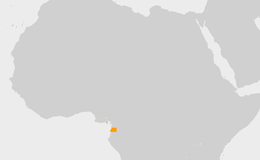
Equatorial Guinea - 2012

Population: 700,000
Capital: Malabo
Trade union rights are non-existent and independent unions have never been allowed to register. President Obiang remains intolerant of any form of dissent or opposition.

reported violations - 2012

Murders: none reported
Attempted Murders: none reported
Threats: none reported
Injuries: none reported
Arrests: none reported
Imprisonments: none reported
Dismissals: none reported
Documented violations - actual number of cases may be higher

Background

A November referendum on constitutional change, dismissed by the opposition as a shame, consolidated the power of the country’s corrupt and autocratic ruler President Obiang, and appeared to pave the way for him to hand over to his son. In February, the government ordered the staff of state radio and television not to cover the pro-democracy Arab Spring movements. In March, the government banned demonstrations and blocked an opposition party from staging a rally. Activists from another opposition party were prevented from staging a Labor Day protest in May.

Trade union rights in law

Lacking and ambiguous legal provisions considerably complicate union organising organising The process of forming or joining a trade union, or inducing other workers to form or join one. . Although the government ratified several ILO International Labour Organization A tripartite United Nations (UN) agency established in 1919 to promote working and living conditions. The main international body charged with developing and overseeing international labour standards.

See tripartism, ITUC Guide to international trade union rights
core conventions in 2001, it has still not adapted its legislation accordingly.

In order to be recognised, a union must have at least 50 members from the same workplace and the same geographical area, and company unions are not provided for by law. Furthermore, a law allowing the unionisation of public administration officials has still not been drafted and the legal framework for collective bargaining collective bargaining The process of negotiating mutually acceptable terms and conditions of employment as well as regulating industrial relations between one or more workers’ representatives, trade unions, or trade union centres on the one hand and an employer, a group of employers or one or more employers’ organisations on the other.

See collective bargaining agreement
is deficient.

Finally, the law does not make it clear whether the right to strike strike The most common form of industrial action, a strike is a concerted stoppage of work by employees for a limited period of time. Can assume a wide variety of forms.

See general strike, intermittent strike, rotating strike, sit-down strike, sympathy strike, wildcat strike
is allowed in public utilities, and which services are deemed to be essential.

In practice

Trade unions still not recognised: The authorities do not recognise trade unions. In 2004, the government told the ILO International Labour Organization A tripartite United Nations (UN) agency established in 1919 to promote working and living conditions. The main international body charged with developing and overseeing international labour standards.

See tripartism, ITUC Guide to international trade union rights
that "there were no trade unions in the country as there is no tradition of trade unionism”. The Workers’ Union of Equatorial Guinea (UST), the Independent Service Union (SIS), the Teachers’ Trade Union Association (ASD) and the Rural Workers’ Organisation (OTC) have all tried to win recognition recognition The designation by a government agency of a union as the bargaining agent for workers in a given bargaining unit, or acceptance by an employer that its employees can be collectively represented by a union. , but the authorities have refused. Delegations are no longer sent to the International Labour Conference and in 2011 the ILO International Labour Organization A tripartite United Nations (UN) agency established in 1919 to promote working and living conditions. The main international body charged with developing and overseeing international labour standards.

See tripartism, ITUC Guide to international trade union rights
again had to remind the government it had failed to submit the reports due that year. It urged the government to bring its legislation into line with core ILO International Labour Organization A tripartite United Nations (UN) agency established in 1919 to promote working and living conditions. The main international body charged with developing and overseeing international labour standards.

See tripartism, ITUC Guide to international trade union rights
standards and to resume constructive dialogue with the ILO International Labour Organization A tripartite United Nations (UN) agency established in 1919 to promote working and living conditions. The main international body charged with developing and overseeing international labour standards.

See tripartism, ITUC Guide to international trade union rights
.
© ITUC-CSI-IGB 2010 | www.ituc-csi.org | Contact Design by Pixeleyes.be - maps: jVectorMap