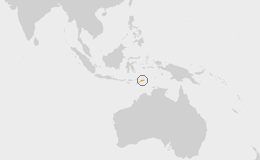
Timor Leste (East Timor) - 2011

Population:
Capital:

reported violations - 2011

Documented violations - actual number of cases may be higher

Background

East Timor, independent since 2002, is one of the poorest countries in the world, despite its oil and gas reserves. The President José Ramos-Horta and the Prime Minister José “Xanana” Gusmão remain in power but the apparent failure of the government in the fight against corruption and nepotism are eroding the stability of the four-party coalition. At the end of December, the Prime Minister stated that the UNMIT troops (United Nations Integrated Mission in Timor-Leste) should leave the country because the national forces are capable of keeping the peace.

reported violations- 2011

Documented violations - actual number of cases may be higher

Trade union rights in law

Although fundamental trade union rights are guaranteed, areas of concern exist in the labour law. Freedom of association freedom of association The right to form and join the trade union of one’s choosing as well as the right of unions to operate freely and carry out their activities without undue interference.

See Guide to the ITUC international trade union rights framework
is secured in the Constitution and the Labour Code, and in 2009 Timor Leste ratified the two ILO International Labour Organization A tripartite United Nations (UN) agency established in 1919 to promote working and living conditions. The main international body charged with developing and overseeing international labour standards.

See tripartism, ITUC Guide to international trade union rights
core conventions on trade union rights. However, foreign nationals are not allowed to participate in the “administrative or social organs of a union”. While termination of employment for union activity is explicitly prohibited in law, the protection is partly undermined by another provision which allows for financial compensation in lieu of reinstatement if the employer refuses to reinstate the worker.

Furthermore, trade union activities are hampered by provisions in the Freedom, Assembly and Demonstration Act. Protests are not allowed within 100 metres of certain buildings, including government offices and diplomatic missions, as well as of infrastructure such as ports and key parts of transportation. The Minister has an absolute right to prohibit or restrict a strike strike The most common form of industrial action, a strike is a concerted stoppage of work by employees for a limited period of time. Can assume a wide variety of forms.

See general strike, intermittent strike, rotating strike, sit-down strike, sympathy strike, wildcat strike
in “essential services essential services Services the interruption of which would endanger the life, personal safety or health of the whole or part of the population. Can include the hospital sector, electricity and water supply services, and air traffic control. Strikes can be restricted or even prohibited in essential services.

See Guide to the ITUC international trade union rights framework
”.

reported violations - 2011

Documented violations - actual number of cases may be higher

In practice

Mainly unstructured economy is a barrier to organising: More than 80% of the active population of East Timor work in the informal economy. Given the difficulties that workers face to find paid employment, few dare to speak out against employers. The problem is compounded by their limited knowledge of trade union rights.

reported violations - 2011

Documented violations - actual number of cases may be higher

Violations

US Mission to East Timor opposes the right to organise of one of its employees: On 22 November, the US Mission to East Timor refused to meet with the General Workers Union of Timor-Leste (SJTL) to discuss the wrongful dismissal of one of its members, Mario Baretto on 16 July. Mr. Baretto had been employed in the Security Services of the Mission since 3 May 2004. The reason given by the Mission for refusing to meet the union was that “according to his terms of employment, Mr. Baretto did/does not have the right to be a member of a trade union and we therefore do not recognise any representative acting in his name”. The US Mission had previously refused to meet with the union and also to attend a Labour Council mediation mediation A process halfway between conciliation and arbitration, in mediation a neutral third party assists the disputing parties in reaching a settlement to an industrial dispute by suggesting possible, non-binding solutions.

See arbitration, conciliation
session, falsely claiming diplomatic immunity.

reported violations - 2011

Documented violations - actual number of cases may be higher
© ITUC-CSI-IGB 2010 | www.ituc-csi.org | Contact Design by Pixeleyes.be