
Belarus
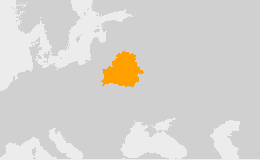
The ITUC affiliate in Belarus is the Belarusian Congress of Democratic Trade Unions (BKDP).
Belerus ratified Convention No. 87 on Freedom of Association
freedom of association
The right to form and join the trade union of one’s choosing as well as the right of unions to operate freely and carry out their activities without undue interference.
See Guide to the ITUC international trade union rights framework
and Protection of the Right to Organise (1948) in 1956 and Convention No. 98 on the Right to Organise and Collective Bargaining
collective bargaining
The process of negotiating mutually acceptable terms and conditions of employment as well as regulating industrial relations between one or more workers’ representatives, trade unions, or trade union centres on the one hand and an employer, a group of employers or one or more employers’ organisations on the other.
See collective bargaining agreement
(1949) in 1956.
Legal
Freedom of association / Right to organise
Freedom of association
The right to freedom of association is enshrined in the Constitution.
The right to freedom of association is recognised by law but strictly regulated.
Anti-Union discrimination
The law does not specifically protect workers from anti-union discrimination.
Barriers to the establishment of organisations
- Excessive representativity or minimum number of members required for the establishment of a union
- Presidential Decree No. 2 of January 1999 sets down minimum membership requirements at the national, branch and enterprise levels that are so high that they make it almost impossible to create new unions, which in turn undermines the position of existing ones. At the national level, there must be a minimum of 500 founding members representing the majority of the regions of Belarus.
- Other formalities or requirements which excessively delay or substantially impair the free establishment of organisations
- Trade unions must provide the official address of their headquarters to be able to register. The headquarters is often the workplace or the premises of the enterprise, as unions are not allowed to register the home addresses of their leaders as the trade union's legal address. A letter from management confirming the address is usually required, making trade unions dependent on the good will of the employer. A list of names of trade unions’ founding members must be sent to the Ministry of Justice.
Restrictions on trade unions’ right to organise their administration
- Restrictions on the right to freely organise activities and formulate programmes
- Under Presidential Decree No. 5 of 31 August 2015 on Foreign Gratuitous Aid, the foreign gratuitous aid cannot be used to organize or hold assemblies, rallies, street marches, demonstrations, pickets or strikes, or to produce or distribute campaign materials, hold seminars or carry out other forms of political and mass campaigning work among the population. A single violation of the Regulation bears the sanction of possible liquidation of the organization.
- Administrative authorities’ power to unilaterally dissolve, suspend or de-register trade union organisations
- Trade unions may be deleted from the register by a decision of the registrar, without any court procedure. The registrar can remove a trade union from the register if, following the issuance of a written warning to the trade union stating that the organisation violates legislation or its own statues, the violations are not eliminated within a month. A union can also be dissolved by the registrar if their recorded data is no longer correct, e.g. if a union loses its legal address and cannot obtain a new one.
- Other external interference allowed by law
- The Criminal Code stipulates that "Discrediting the Republic of Belarus" is punishable with arrest for up to six months or imprisonment for up to two years. According to the Code, "discrediting" means deliberately giving foreign states or foreign or international organisations "false statements" on the country's political, social or economic situation.
Right to collective bargaining
Right to collective bargaining
The right to collective bargaining is enshrined in the Constitution.
The right to collective bargaining is recognised by law.
Barriers to the recognition of collective bargaining agents
- Absence of criteria or discretionary, unclear or unreasonable criteria for determining representative organisations
- Presidential Ordinance No. 278 recommends that each company and organisation conclude one collective agreement. The criteria for determining the representative organisation are not specified in law.
Restrictions on the principle of free and voluntary bargaining
- Compulsory conciliation
conciliation
An attempt by a neutral third party, a conciliator, to aid the settling of an industrial dispute by improving communications, offering advice and interpreting issues to bring the disputing parties to a point where they can reconcile their differences. The conciliator does not take as active a role as a mediator or an arbitrator.
See arbitration, mediation and / or binding arbitration arbitration A means of resolving disputes outside the courts through the involvement of a neutral third party, which can either be a single arbitrator or an arbitration board. In non-binding arbitration, the disputing parties are free to reject the third party’s recommendation, whilst in binding arbitration they are bound by its decision. Compulsory arbitration denotes the process where arbitration is not voluntarily entered into by the parties, but is prescribed by law or decided by the authorities.
See conciliation, mediation procedure in the event of disputes during collective bargaining collective bargaining The process of negotiating mutually acceptable terms and conditions of employment as well as regulating industrial relations between one or more workers’ representatives, trade unions, or trade union centres on the one hand and an employer, a group of employers or one or more employers’ organisations on the other.
See collective bargaining agreement
, other than in essential services essential services Services the interruption of which would endanger the life, personal safety or health of the whole or part of the population. Can include the hospital sector, electricity and water supply services, and air traffic control. Strikes can be restricted or even prohibited in essential services.
See Guide to the ITUC international trade union rights framework
- Pursuant to article 379 of the Labour Code, when disputes arise during the course of collective bargaining, workers must put forward their demands to the employer within one month of the start of negotiations unless otherwise agreed by the parties. If the employer refuses to meet all or part of the workers’ demands, a conciliation committee must be set up. If the parties do not agree with the committee's decision, they can apply to have their case heard by the National Labour Arbitrage.
Right to strike
Right to strike
The right to strike is enshrined in the Constitution.
The right to strike is recognised by law but strictly regulated.
Barriers to lawful strike actions
- Other excessively complex or time-consuming formalities to call a strike
strike
The most common form of industrial action, a strike is a concerted stoppage of work by employees for a limited period of time. Can assume a wide variety of forms.
See general strike, intermittent strike, rotating strike, sit-down strike, sympathy strike, wildcat strike - Section No. 9-1 of the Law on mass events establishes a notification procedure to organise mass events and protests. A notification must be submitted to the local executive and administrative body no later than ten days before the proposed date of the event. The notification must indicate the purpose, type, venue, source of funding for the mass event; date, time of its beginning and ending; an estimated number of participants; surname, name, patronymic of the organiser(s); as well as measures to ensure public order and security during the mass event and measures related to medical care and cleaning the territory after the event. If the organiser of an assembly decides to hold it in a place that is not designated as a location for mass events; they must contact the local executive committee and must submit an application no later than 15 days before the expected date of the mass event. Regarding this last requirement, it should be noted that mass events are to be held in "permanent locations" specifically prescribed for this purpose. At the moment, the permanently assigned locations where mass events may be held are set out by local executive and administering bodies. These places are usually highly inconvenient, located far from city centres and infrastructures of local authorities (parks, gardens, stadiums). For instance, in the city of Minsk, assemblies are allowed in only six public squares.
- Other undue, unreasonable or unjustified prerequisites
- A strike must be held within three months of the failure to reach an agreement through conciliation. The duration of the strike must be specified in advance.
Undue interference by authorities or employers during the course of a strike
- Authorities’ or employers’’’ power to unilaterally prohibit, limit, suspend or cease a strike
strike
The most common form of industrial action, a strike is a concerted stoppage of work by employees for a limited period of time. Can assume a wide variety of forms.
See general strike, intermittent strike, rotating strike, sit-down strike, sympathy strike, wildcat strike action - The President may cancel a strike or suspend it for a period of up to three months in the interest of national security, public order, public health, or where the rights and freedoms of others are threatened.
Undermining of the recourse to strike actions or their effectiveness
- Excessive civil or penal sanctions for workers and unions involved in non-authorised strike
strike
The most common form of industrial action, a strike is a concerted stoppage of work by employees for a limited period of time. Can assume a wide variety of forms.
See general strike, intermittent strike, rotating strike, sit-down strike, sympathy strike, wildcat strike actions - On 8 June 2021, the Belarusian President Alexander Lukashenko signed new legislation which punishes those accused of participating in unauthorized demonstrations with imprisonment for up to three years. Those who are found to participate in or promote "extremist activity" would face up to six years in jail. The definition of “extremist activity” is not clearly defined in the new legislation, and so critics fear that it's likely to be used to suppress any dissent, but also any media activity from organisations opposing or critical of the government. This new law follows laws enacted on 24 May 2021 making it compulsory to obtain a permit from the authorities to organise mass events and prohibiting journalists from reporting live from such events.
- Other legal provisions undermining the right to strike
strike
The most common form of industrial action, a strike is a concerted stoppage of work by employees for a limited period of time. Can assume a wide variety of forms.
See general strike, intermittent strike, rotating strike, sit-down strike, sympathy strike, wildcat strike - Strike participants may not receive financial aid or subsidies from foreign organisations.
Limitations or ban on strikes in certain sectors
- Unreasonable or discretionary (i.e. without negotiation with social partners
social partners
Unions and employers or their representative organisations.
or absence of an independent authority in the event of disagreement) determination of the extent of the “minimum service
minimum service
The operations needed in a public or private establishment during a strike, normally to avoid compromising the life or basic needs of the population or causing irreversible damages.
See Guide to the ITUC international trade union rights framework ” to be guaranteed during strikes in public services - According to article 392 of the Labour Code, a minimum service must be ensured during all strikes. The minimum service is to be determined by a collective agreement, and where no such agreement exists, the parties shall agree on the minimum service within 5 days of the decision to call a strike. If the parties do not reach an agreement, the local executive and administrative body can make a decision on the minimum service that is binding on the parties.
Other restrictions
- Other restrictions
- On 8 June 2021, the Belarusian President Alexander Lukashenko signed new legislation which punishes those accused of participating in unauthorized demonstrations with imprisonment for up to three years. Those who are found to participate in or promote "extremist activity" would face up to six years in jail.
In practice
In the afternoon of Thursday 24 February 2022, unknown persons in civilian clothes broke into the office of the Free Metalworkers’ Union (SPM) without presenting documents, searched the office, and seized office equipment and mobile phones from the office management and employees. The SPM deputy chairman, Aleksandr Evdokimchik, was arrested and taken away to an undisclosed location. Earlier in the morning, the executive committee of BKDP, the national trade union centre trade union centre A central organisation at the national, regional or district level consisting of affiliated trade unions. Often denotes a national federation or confederation. and ITUC affiliate, could not get in touch with Igor Komlik, the lawyer of the trade union. It is reasonable to suppose that he was also arrested by law enforcement agencies. The Belarusian government is consistently increasing pressure on independent trade unions, carrying out repression and reprisals against the union leaders, activists and members.
The Free Metalworkers’ Union (SPM) reported increasing repression against SPM leaders and members during the last months of 2021. Union leaders and members have been fired and detained, and some have been forced to flee the country to avoid prosecution.
Nearly all SPM local chairs were fired from major companies, including Minsk Automobile Plant (MAZ), BELAZ, Minsk Tractor Works (MTW), BKM Holding, Minsk Motor Plant (MMP), Minsk Wheel Tractor Plant, and Minsk Electrotechnical Plant.
On 17 November, the local SPM chair at MAZ, Artyom Zhernak, was detained by the state security committee, and his apartment was searched twice. Zhernak still remains in custody.
A search was also conducted at the home of Alla Tsvirko, an SPM activist at MAZ. Under the threat of criminal prosecution, she was forced to flee Belarus, as was the SPM press secretary at MAZ, Sergey Gultsov.
Repression has intensified against SPM union members at MMP. On 21 October, Nikolai Shibeko was detained, his home searched and equipment seized. On 22 October, state security officers took SPM members Pavel Gaiduk and Daniil Vosinsky from work. They were sentenced to ten and 15 days of arrest, respectively, and fired from MMP after their release.
On the same day, union member Alexander Mogilevich was taken to the state security committee for interrogation. On 3 November, Viktor Verovsky, a member of SPM whose contract with MMP had been not extended during the summer, was detained and sentenced to 45 days of arrest. State security officers searched the home of Andrei Komlik-Yamatin, a former MMP worker and SPM member, and he was forced to flee the country.
The home of SPM activist at BELAZ, Alexander Smolsky, was searched three times, and he had to leave Belarus under the threat of criminal prosecution. At the end of 2021, after prolonged pressure and threats, BELAZ did not extend the labour contract of Alexey Gubich, the SPM local chair. After his dismissal, four members of the SPM local union local union A local branch of a higher-level trade union such as a national union. were deprived of bonus payments.
On 7 December, SPM member Viktor Mikhalchik was detained in Grodno for two days and later fined with Br800 (US$310).
The harassment of union members is also leading to discrimination with SPM union members excluded from the lists of workers entitled to various additional payments and incentives under collective agreements.
Workers in Belarus still do not enjoy the right to establish unions without previous authorisation. The authorities continue to deny trade unions registration while courts deny trade unions the right to appeal such refusals.
For example, the Free Trade Union took several attempts to register its four enterprise-level organisations. All the necessary documents were prepared in a timely manner, sent to the Sovetsky District Administration of the City of Minsk by registered mail on 16 March 2021 and delivered to an employee of the district administration. The law requires that such applications should be registered on the date of their delivery. The authorities took a month to reply to the registration request. In the decision refusing the registration, the authorities wrongfully identified the date of delivery of the request as 18 March 2021 and based the refusal on the missed deadline for registration. Despite this obvious factual error, appealing the refusal proved to be fruitless.
Additionally, the authorities continue to demand that trade unions provide a legal address. This practice allows the employer to successfully block the registration by simply refusing to provide a legal address to the workplace union. Most recently, employers such as the Belorussian State Medical University, the Minsk Scientific and Practical Centre for Surgery, Transplantology and Hematology, among others, used the refusal to provide a legal address to successfully block registration of a trade union organisation in the enterprise. Similar practice has been reported by the Panacea Trade Union which organises healthcare workers.
In Belarus, workers who take part in activities of independent trade union continue to suffer dismissals form their workplaces. There is collusion between state law enforcement and the employers of these dismissed workers. Representatives of the employer, including enterprise security members, pressure workers to leave independent trade unions and to give negative evidence against independent unions. Those who refuse face dismissal or non-renewal of their fixed-term contract.
In June 2021 the Belarussian Independent Union
independent union
A trade union that is not affiliated to a national union. Can also be a union that is not dominated by an employer.
See yellow union
(BITU) reported the dismissal of seven trade union activists at the JSC “Grodno Azot” whose expired contracts were not renewed. Before the dismissal the workers faced demands to leave the BITU, speak negatively of the BITU in the workplace bulletin, and join the pro-government affiliate of the FPB.
Putting pressure on union members has also been reported by the “Panacea” Trade Union, which organises healthcare workers. Workers were coerced into leaving the trade union, and they suffered dismissals and various forms of restrictions – for example, in the ambulance service substation No. 11 of the 3d City Klumov Clinical Hospital in the City of Minsk. The National Scientific and Practical Center of Traumatology and Orthopedics and the Belorussian Academy of Post-Graduate Studies have issued the codes of conduct that de facto prohibit any criticisms of the administration and any interviews concerning the employees’ working conditions without prior authorisation from the management.
The Belarusian State University (BSU) forced four lecturers, members of the Free Trade Union at BSU, to resign or refused to renew their fixed-term employment contracts. The Research Institute of Genetics and Cytology of the National Academy of Sciences dismissed at least four officials of the Free Trade Union at the Institute. Their dismissal took place immediately after the police confiscated the list of trade union members during the search they had made in the apartment of one of the union’s officials, which may point to a possible cooperation between the police and the employer. The dismissed included the president of the union, the treasurer and the internal auditor. Each of them was summoned individually by the employer and pushed to sign a termination of contract by “mutual consent”. Between August and September 2021, the institute ended the contract of two other trade union members while three trade unionists were disciplinarily dismissed for having taken part in the protests actions in August 2021.
Trade unions are subject to invasive and unjustified searches of their premises and the houses of their officials. In 2021 the law enforcement agencies made regular searches at the Belarusian Radio Electronics Workers’ Union (REPU). On 16 February 2021, the REPU’s headquarters in Minsk was searched and communications and other equipment and documents were seized, with the homes of several REPU activists searched at the same time. Law enforcement officers claimed the searches were a part of the investigation into the funding of mass disorders in Belarus.
Further, on 26 June 2021, officers of the RB State Security Committee searched the regional office of the REPU in Brest. On 16 July 2021, law enforcement officers appeared at the REPU’s headquarters in Minsk again and broke down the door and sealed the other; later on, the law enforcement officers claimed they were investigating another organisation and that the search had nothing to do with the activities of the REPU.
On 21 July 2021, the authorities searched the house of the chair of the SPB Internal Auditing Committee, Victor Stukov. On 14 July 2021, officers of the Polotsk District Department of Interior searched the apartment of the president of the Free Trade Union of Belarus, Nikolai Sharakh. On 15 June 2021, officers of the Minsk City Department of Interior made a search of the private house of the SPB vice president, Gennadiy Bykov. In one case, Bykov’s house was searched in relation to investigation of a case of an unknown person who wrote the words “Cozzers”, “Court”, and “Met” on a public transport stop booth in a village located 10 kilometres from Polotsk.
In addition, trade union activists/workers of the JSC Naftan were repeatedly apprehended by the militia for administrative offences. They were charged with participation in unauthorised events, their homes were searched and the workplace union office was visited by militia officers. On 8 July 2021, the activists of this workplace union had another round of home searches under the pretext of the investigation of a criminal case over the damage caused to the car of one of the “Naftan” managers; based on the outcomes of the searches, the militia apprehended the deputy chair of the local union local union A local branch of a higher-level trade union such as a national union. , Denis Gurskiy, and the workplace union treasurer, Dmitriy Koiro, for three days. Subsequently, the two activists were released but remained suspects in the case.
In the aftermath of the 2020 protest against the rigged presidential elections, a majority of leaders of the 2020 strike
strike
The most common form of industrial action, a strike is a concerted stoppage of work by employees for a limited period of time. Can assume a wide variety of forms.
See general strike, intermittent strike, rotating strike, sit-down strike, sympathy strike, wildcat strike
committees have lost their jobs, others have had to escape the country and others continue to face repression from the law enforcement agencies, including through surveillance, threats, searches and administrative arrests on trumped-up charges.
The JSC BMP (steelworks) workers Alexander Bobrov, Igor Povarov and Evgeniy Govor were sentenced to two and a half to three years of imprisonment under Part 1 Art. 342 of the Republic of Belarus (RB) Criminal Code for organising
organising
The process of forming or joining a trade union, or inducing other workers to form or join one.
and actively participating in actions that caused a major breach of public order. The workers received this sentence because they tried to call a strike
strike
The most common form of industrial action, a strike is a concerted stoppage of work by employees for a limited period of time. Can assume a wide variety of forms.
See general strike, intermittent strike, rotating strike, sit-down strike, sympathy strike, wildcat strike
at the workplace on 17 August 2020.
On 18 May 2021, the Bobruisk District and City Court convicted the chair of the workplace union at the JSC “Belshina” (tyre works), Sergei Gurlo. Gurlo was found guilty of violation of Article 369 of the Criminal Code for “insulting a law enforcement officer on social media”, which he allegedly committed in 2020. Sergei was sentenced to 18 months of restriction of freedom in a clear attempt to restrict the right to expression of a trade union leader. The case was tried in closed hearing, and Sergei was forced to sign a non-disclosure document concerning the criminal case materials.
On 7 July 2021, officers of the State Security Committee of the Republic of Belarus apprehended the leader of the BITU affiliate at the JSC Peleng (the optical mechanics sector), Andrei Dechko, who was one of the initiators of the workplace union creation (ultimately, it was denied registration), and his apartment was searched.
On 20 April 2021, the chair of the workplace union, a CPB affiliate, at the Academy of Sciences of the Republic of Belarus was forcibly transported from work to the internal affairs agency. After she stayed for 11 hours at a police station, the officers prepared a record of an administrative offence for carrying out an unauthorised one-person picket. On 21 April, she was sentenced by court to a fine. On 22 April, her husband was taken away from work for the purpose of carrying out a search.
Yegor Kanetskiy, a student at the School of Biology at the Belarusian State University (BSU), a member of an independent organisation (”Задзіночання беларускіх студэнтаў”) and an activist of the Free Trade Union of Belarus (SPB), remains in prison since November 2020. He was among the seven BSU students who were recognised by independent human rights defenders as political prisoners.
The pressure on the Belarusian Independent Trade Union (BITU) has increased dramatically, with a number of union leaders, activists and members detained, arrested and fined, and union activists’ homes and union offices searched.
On the morning of 21 September 2021, law enforcement agencies searched the apartment of the leader of the primary trade union organisation of the Belarusian Independent Trade Union at JSC Naftan.
The apartment of Volha Brytsikava, local BITU chairperson, was searched, and her computer was seized. She herself was detained and later released. Two more BITU members, Andrey Berezovsky and Roman Shkodin, were arrested for seven and 15 days, respectively.
At Grodno Azot, vice-chairperson of the BITU local union
local union
A local branch of a higher-level trade union such as a national union.
, Valiantsin Tseranevich, and BITU members Andrei Paheryla, Vladimir Zhurauka, Grigory Ruban, Dmitry Ilyushenko and Aleksey Sidor, were detained.
In Zhlobin Aliaksandr Hashnikau, secretary-treasurer of the BITU primary branch at the Belarusian Metallurgical Plant BMZ, was arrested on 17 September 2021 and arbitrarily detained. According to his wife, he disappeared in mid-September and was located a week later. This continues the widespread repression against independent trade union members that has intensified one year after Lukashenko’s presidential election victory in August 2020. The actions have been denounced by international unions.
The BITU president, Maksim Pazniakou, was detained on 17 September but later released and fined US$350 for a social media post from 2020 featuring a Belarusian music group, later labelled by authorities as extremist.
In an unprecedented attack on the independent representative organisation of journalists in Belarus, the Belarusian Ministry of Justice filed a lawsuit with the Supreme Court on 22 July 2021 to liquidate the Belarusian Association of Journalists (BAJ). BAJ has been accused by the government of violating national worker associations legislation. The application for dissolution of the BAJ was approved by the Supreme Court on 27 August 2021. BAJ was the only independent representative organisation of journalists and media workers in Belarus and one of the country’s most prominent champions of freedom of expression. The European Federation of Journalists (EFJ) and the International Federation of Journalists (IFJ) strongly condemn this parody of justice.
BAJ is just one among dozens of organisations targeted for liquidation, with others including cultural, environmental and heritage protection groups, the Belarusian PEN Centre, the Office for the Rights of Disabled People, the National Youth Council, the Belarus Press Club, organisations focusing on gender rights, and groups that support older people.
The EFJ general secretary, Ricardo Gutiérrez, has stated that the BAJ will continue its activities despite its legal dissolution.
On 8 July 2021, a number of activist members of the Belarusian Independent Trade Union JSC “Naftan” in Navapolatsk had their homes searched and two were detained. According to leadership of the primary trade union organisation at Naftan, the individuals whose homes were searched were trade union lawyer Aliaksandr Kapshul; deputy chairperson of the primary organisation Jury Hashau; deputy chairperson Dzianis Hurski; and secretary-treasurer Dzmitry Koyra. Dzianys Hursky and Dzmitry Koyra were detained for 72 hours and then released.
The authorities alleged that the searches and detentions were in relation to a criminal case about the damage of the paintwork on Siarhei Brykun’s car, which occurred last October. Siarhei Brykun is deputy director for ideology at the plant Polymir of the JSC Naftan. However, the leadership of the trade union organisation believes these searches were intended to intimidate the individuals and were part of targeted actions against trade unions.
On Wednesday 7 July 2021, Andrei Dziachko, chairperson of the primary trade union of the Belarusian Independent Trade Union of the optical-mechanical industry JSC “Peleng”, was detained at his workplace by employees of the State Security Committee (KGB). Last year, a number of employees of JSC Peleng left the pro-governmental trade union Belprofmash and established an independent trade union. Having been denied registration of the independent trade union by the Maskouski District Administration of Minsk, the trade union filed a lawsuit to appeal the administration’s decision. The trial is still going on. The trade union believes that Andrei’s detention is connected with his active public activities.
On 9 June 2021, the Belarusian Ministry of Justice wrote to the Belarusian Association of Journalists (BAJ) demanding that the organisation disclose thousands of documents, including membership lists, application forms, meeting minutes, correspondence and financial records. This follows a raid of the BAJ offices by the Ministry of Justice in February 2021. The European Federation of Journalists (EFJ) has denounced the request for documents as another example of the ongoing harassment of the BAJ and of government attempts to supress the free press.
A further raid on the organisation occurred on 14 July 2021, following which the government blocked the orgnisation’s bank accounts on 20 July. Domestic and international trade unions have strongly condemned these actions as supressing freedom of association
freedom of association
The right to form and join the trade union of one’s choosing as well as the right of unions to operate freely and carry out their activities without undue interference.
See Guide to the ITUC international trade union rights framework
and freedom of speech.
On 8 June 2021, the Belarusian president, Alexander Lukashenko, signed new legislation that punishes those accused of participating in unauthorised demonstrations with imprisonment of up to three years. Those who are found to participate in or promote “extremist activity” would face up to six years in jail. The International Federation of Journalists (IFJ) and the Belarussian Association of Journalists (BAJ) have denounced this legislation as repressive and breaching freedom of speech and information. The definition of “extremist activity” is not clearly defined in the new legislation, and so critics fear that it’s likely to be used to suppress any dissent, but also any media activity from organisations opposing or critical of the government. This new law follows laws enacted on 24 May 2021 making it compulsory to obtain a permit from the authorities to organise mass events and prohibiting journalists from reporting live from such events.
The state authorities have also interfered in trade union activities in an effort to undermine the exercise of the right to organise. For instance, on 5 March 2021, officers of the Moscow District Department of Interior in the City of Minsk disrupted the founding conference of the students’ free trade unions. Breaking into the facility in plain clothes with masked faces and no insignia, they resorted to violence, apprehending several participants of the meeting who were later on sentenced to 14 and 15 days of detention. The grounds for resorting to such measures were the participation in an event held by an illegal organisation. Yet the Free Trade Union of Belarus, which had organised the conference, is an officially registered and functioning organisation. The formal grounds for the administrative arrests were the application of Article 24.3 of the RB Administrative Code regarding “defying a legitimate instruction of an officer”.
Since August 2020, Belarus has been the site of unprecedented public protest against fraudulent presidential elections. The incumbent president, Alexander Lukashenko, was re-elected to a sixth term in office, on 9 August 2020, sparking an outcry.
Workers, students and teachers participating in the sweeping pro-democracy demonstrations have faced arrest, violent repression, and deprivation of human rights. Belarusian state administration and security forces have put pressure on protesters, strikers and their families. More than 25,000 citizens have been sanctioned for taking part in protests, hundreds have served terms in prison, and several thousand have been made to flee the country.
University staff and students have faced pressure from their university administrations for establishing trade union organisations and trying to join the Free Trade Union of Belarus (SPB), a member of ITUC-affiliated Belarusian Congress of Democratic Trade Unions (BKDP). At least 180 students were expelled, with professors and academics facing dismissals.
In the General Agreement concluded between the government, associations of employers and trade unions for 2016-2018, a provision regarding the mandatory participation of representatives of all trade unions present in the enterprise in collective bargaining
collective bargaining
The process of negotiating mutually acceptable terms and conditions of employment as well as regulating industrial relations between one or more workers’ representatives, trade unions, or trade union centres on the one hand and an employer, a group of employers or one or more employers’ organisations on the other.
See collective bargaining agreement
was included for the first time (paragraph 45). The provision was again included in the 2019-2021 General Agreement (article 49). The inclusion of this provision in the General Agreement was to be a significant contribution to the building and development of sound social relations in Belarus.
However, in practice BKDP observes that many employers do not comply with this agreement. For instance, the representative of the BNP union at OAO “Grodno Azot” company was not invited to a meeting of the collective bargaining
collective bargaining
The process of negotiating mutually acceptable terms and conditions of employment as well as regulating industrial relations between one or more workers’ representatives, trade unions, or trade union centres on the one hand and an employer, a group of employers or one or more employers’ organisations on the other.
See collective bargaining agreement
commission. The proposal of BNP to include in the text of the collective agreement the names of all trade union organisations representing the interests of workers in the company as per paragraph 45 of the General Agreement was ignored. As a result, the collective agreement of OAO “Grodno Azot” concluded on 3 January 2017 for 2017-2020 does not mention the BNP primary union organisation, and the scope of the agreement covers only the employees of the enterprise who are members of the state-controlled Belkhimprofsoyuz union.
On 24 August 2018, Gennady Fedynich and Igor Komlik, two leaders of the Belarusian Radio and Electronics Industry Workers’ Union (REP), were found guilty of tax evasion and failing to submit tax declarations during 2011 to 2012. The two were sentenced to four years’ suspended imprisonment and a ban on holding senior positions for five years. They were also fined US$23,000 and made to pay the costs of the trial.
The trumped-up charges and the court decision have been described by international unions as an attack on the trade union movement and a miscarriage of justice.
Two years on, Fedynich and Komlik are under strict house arrest order: they must be in their home from 7 p.m. to 6 a.m. on weekdays, they do not have the right to leave their home on weekends and they do not have the right to leave Minsk.
The BKDP reports that following the abusive imposition of large administrative fines on SPB members Nikolai Sharakh and Viktor Stukov for organising
organising
The process of forming or joining a trade union, or inducing other workers to form or join one.
a strike
strike
The most common form of industrial action, a strike is a concerted stoppage of work by employees for a limited period of time. Can assume a wide variety of forms.
See general strike, intermittent strike, rotating strike, sit-down strike, sympathy strike, wildcat strike
and picketing
picketing
Demonstration or patrolling outside a workplace to publicise the existence of an industrial dispute or a strike, and to persuade other workers not to enter the establishment or discourage consumers from patronising the employer. Secondary picketing involves picketing of a neutral establishment with a view to putting indirect pressure on the target employer.
from May to October 2018 at OAO Polotsk-Fiberglass company, the SPB union office was seized and access to the office was denied. As of November 2018, the employer refused to extend the rental agreement. Then, in February 2019, the employer filed a claim with the Economic Court regarding the forced eviction of the union from the office and release of the premises from union property. The court ruled to evict SPB from its office. On 28 August 2019, the Economic Court of the Vitebsk Region imposed an administrative fine of 10 basic units (US$130) on SPB for the alleged non-enforcement of a court decision. The court hearing on the administrative sentence was held in the absence of any SPB representatives.
On August 24 2018, after a two-week trial, Judge Marina Fedorova of the Sovetsky District Court of Minsk, found two officials of the Belarusian Radio and Electronics Industry Workers’ Union (REP), Gennady Fedynich and Igor Komlik, guilty of tax evasion and failing to submit tax declarations during 2011 to 2012. The two were sentenced to four years’ suspended imprisonment (the two are currently under a quasi-house arrest arrangement) and a ban on holding senior positions for five years. They were also fined US$23,000 and made to pay the costs of the trial.
During the verdict announcement, a picket line was organised near the House of Justice. Riot policemen detained the most active picketers, including REP union activists Pavel Mrochko and Alexander Chmyhov.
The convictions came after a 12-month investigation conducted by the Department of Financial Investigations of the State Control Committee, which began on 2 August 2017 when officers searched the premises of the REP and the affiliated Belarusian Independent Trade Union (BNP). During this search, officials seized union computers and financial documents and various union officials and activists, including union leaders Gennady Fedynich and Nikolai Zimin, who were briefly detained. Igor Komlik, the accountant of REP, was detained for two months. During the 12-month investigation of the case, Fedynich and Komlik had travel restrictions imposed on them.
In a letter to the High Representative of the Union for Foreign Affairs and Security Policy dated 13 December 2018, the decision was described by international peak union bodies as a miscarriage of justice and an attack on the trade union movement. It has been alleged that the case was politically motivated and that there was no valid evidence presented by the prosecution at trial. An appeal against the decision was rejected by the city court of Minsk on 9 November 2018..
Workers at the Belarusian potash fertiliser company Belaruskali face violations of their fundamental working rights, targeting members of the Belarusian Independent Trade Union (BITU). Workers are being forced to relinquish their BITU membership by signing withdrawal forms prepared by senior management.
This conduct constitutes a clear breach of international labour standards
international labour standards
Principles and norms related to labour matters, primarily codified in the Conventions and the Recommendations of the International Labour Organization (ILO). Include core labour rights such as freedom of association and the right to organise, the right to collective bargaining and the right to strike, which are all covered by ILO Conventions 87 and 98.
See ITUC Guide to international trade union rights
, including Convention 87 on Freedom of Association
freedom of association
The right to form and join the trade union of one’s choosing as well as the right of unions to operate freely and carry out their activities without undue interference.
See Guide to the ITUC international trade union rights framework
and Protection of the Right to Organize and Convention 98 on the Right to Organize and Collective Bargaining
collective bargaining
The process of negotiating mutually acceptable terms and conditions of employment as well as regulating industrial relations between one or more workers’ representatives, trade unions, or trade union centres on the one hand and an employer, a group of employers or one or more employers’ organisations on the other.
See collective bargaining agreement
of the International Labour Organization
International Labour Organization
A tripartite United Nations (UN) agency established in 1919 to promote working and living conditions. The main international body charged with developing and overseeing international labour standards.
See tripartism, ITUC Guide to international trade union rights
.
On 26 January 2019, new amendments to Law No. 114-3 on Mass Events entered into force. These amendments, which were not discussed with the social partners social partners Unions and employers or their representative organisations. , provide for stricter conditions and rules to organise public assemblies and demonstrations, including the strict determination of specific areas in the city. For instance, in the city of Minsk, assemblies are allowed in only six squares. As a result, the format of mass events is imposed on the organisers and participants, since rallies and pickets can be held only in these designated squares, while processions and demonstrations are impossible.
In addition, Decree No. 49 of 24 January 2019 adopted by the Council of Ministers provides that organisers of mass events have to pay for a number of expenses related to the event, such as public order services, medical care, and cleaning. With such constraints, independent trade unions do not have the financial ability to organise public assemblies.
On 15 January 2019, the Belarusian independent trade union of Miners, Chemists, Oil-refiners, Energy, Transport, Construction and other Workers (BITU) finally received a notification of registration of a local organisation at Remmontazhstroy. The branch of BITU had previously made three unsuccessful attempts to gain registration after its first application in June 2018. Other independent trade unions in Belarus continue to struggle to register their local organisations.
Following the successful registration of the Remmontazhstroy BITU subsidiary, a second BITU local organisation at Kaliyspetstrans took steps in order to gain registration. However, workers were reportedly forced by management to resign from the BITU before the subsidiary was able to apply for registration.
On 1 January 2019, the much-protested Decree 1 entered into force. The decree is supposedly designed to enable the government of Belarus to help citizens find jobs, encourage the unemployed to enter employment and to assist more Belarusians to become self-employed. Opponents from the trade union movement within Belarus and the international trade union movement have opposed the introduction of the decree on the basis that it contains elements of forced labour and creates supplementary ways to manipulate workers’ rights in addition to the fixed-term contracts system. In addition, there are many concerns regarding the lack of transparency surrounding how the decree will be enforced.
The state registration of the Belaruisan Independent Trade Union (BNP), which represents 400 workers at the unitary construction enterprise “Remmontazhstroy”, was refused by the Soligorsk District Executive Committee on 24 July 2018 (Decision No. 1048). The union’s second application for registration was also rejected without reasons being provided. The chair of the ITUM, Siarhei Charkasau, alleged that the authorities are deliberately attempting to prevent the union from becoming registered, and that other unions have not faced similar problems when applying for registration.
On 24 October 2018, trade union leaders raised the issue of the refusal to register trade unions at the Council for Improvement of Legislation in Social and Labour Spheres before the Deputy Minister of Labour, representatives from the Ministry of Justice and the Federation of Trade Unions of Belarus.
The NPG union at the OAO “Belaruskali” Company made a complaint to the Soligorsk district court regarding the alleged unlawful behaviour of the Soligorsk district executive. The court considered the case on 7 December but ultimately sided with the district executive. The ITUC asserts there has been a violation of Convention 87 as well as domestic laws relating to trade unions.
It has been alleged that registration issues are politically motivated to prevent independent unions from becoming registered, and that the state-controlled Federation of Trade Unions of Belarus (FPB) do not face equivalent difficulties in the registration process.
The Belarusian Free Trade Union (SPB) primary organisation has been denied registration by the Bobruisk town executive committee due to it not having a legal address. It has been alleged that landlords in Bobruisk have been unilaterally terminating leases with the SPB because of pressure placed on them by the Bobruisk town executive.
In 2018, workers at Remmontazhstroy Trust were precluded from engaging in collective bargaining
collective bargaining
The process of negotiating mutually acceptable terms and conditions of employment as well as regulating industrial relations between one or more workers’ representatives, trade unions, or trade union centres on the one hand and an employer, a group of employers or one or more employers’ organisations on the other.
See collective bargaining agreement
because of the Soligorsk’s refusal to register the BNP union at the workplace. This occurred after the parent company JSC Belaruskali underwent a restructure, which saw the Trust separated from the Company and turned into a subsidiary of it. The employer of the subsidiary Trust refused to bargain with a non-registered union body.
The Belarusian Congress of Democratic Trade Unions (the BKDP) was refused permission to hold a demonstration on 7 October 2018 by the Minsk City Executive Committee (World Day for Decent Work). The demonstration was to protest against the implementation of discriminatory labour laws including Decree No. 29 of 26 July 1999 and Decree No. 5 of 15 December 2014.
The BKDP was also refused permission to picket the Ministry of Justice building on 5 December 2018 to protest the Soligorsk District Executive Committee’s refusal to register a union of workers at the Unitary Construction Enterprise the Trust “Remmontazhstroy”. This is an independent union
independent union
A trade union that is not affiliated to a national union. Can also be a union that is not dominated by an employer.
See yellow union
affiliated with the BNP.
During 2018, the Free Metalworkers Union (SPM), the Belarusian Independent Trade Union (BNP), the REP Union and the Belarusian Free Trade Union (SPB) were denied permission to hold pickets in support of the REP Trade Union, against the introduction of changes in the Labour Code on 7 October 2018 and against refusals to register the BNP primary-level trade union organisation of workers of the unitary construction enterprise Trust “Remmontazhstroy” by the local executive bodies in Minsk, Mogilev, Vitebsk, Zhlobin, Borisov, Gomel, Brest and Novopolotsk.
Management from the Bobruisk Tractor Parts and Units refused to include Mikail Kovalkov, the head of the SPB independent union
independent union
A trade union that is not affiliated to a national union. Can also be a union that is not dominated by an employer.
See yellow union
within the company, in the collective bargaining
collective bargaining
The process of negotiating mutually acceptable terms and conditions of employment as well as regulating industrial relations between one or more workers’ representatives, trade unions, or trade union centres on the one hand and an employer, a group of employers or one or more employers’ organisations on the other.
See collective bargaining agreement
commission to bargain the 2016-19 collective agreement. The bargaining therefore was conducted without any SPB representatives involved. The leader of the SPB, Nikolai Sharakh, was also not admitted to the collective bargaining
collective bargaining
The process of negotiating mutually acceptable terms and conditions of employment as well as regulating industrial relations between one or more workers’ representatives, trade unions, or trade union centres on the one hand and an employer, a group of employers or one or more employers’ organisations on the other.
See collective bargaining agreement
commission.
The Bobruisk tractor parts company refused to permit Mikhail Kovalkov, the leader of the company union
company union
Can be used to describe either an enterprise union or a yellow union.
affiliated to the Belarusian Free Trade Union (SPB), to participate in the collective bargaining
collective bargaining
The process of negotiating mutually acceptable terms and conditions of employment as well as regulating industrial relations between one or more workers’ representatives, trade unions, or trade union centres on the one hand and an employer, a group of employers or one or more employers’ organisations on the other.
See collective bargaining agreement
commission for the conclusion of the company agreement for 2016-2019. Similarly, during the negotiation of the 2017-2020 collective agreement of the GrodnoAzot chemical company, the company representative of the Belarusian Independent Trade Union (BNP) was deliberately excluded from the meetings of the collective bargaining
collective bargaining
The process of negotiating mutually acceptable terms and conditions of employment as well as regulating industrial relations between one or more workers’ representatives, trade unions, or trade union centres on the one hand and an employer, a group of employers or one or more employers’ organisations on the other.
See collective bargaining agreement
commission and his proposals were never discussed. As a result, the GrodnoAzot collective agreement for 2017-2020 contains none of the BNP proposals and excludes BNP union members from its scope.
The Belarusian Congress of Democratic Trade Unions (BKDP) recalls that judges in Belarus are nominated by the President and are fully dependent on state bodies. The principle of separation of powers is not observed and courts totally disregard national laws on trade unions and international labour standards
international labour standards
Principles and norms related to labour matters, primarily codified in the Conventions and the Recommendations of the International Labour Organization (ILO). Include core labour rights such as freedom of association and the right to organise, the right to collective bargaining and the right to strike, which are all covered by ILO Conventions 87 and 98.
See ITUC Guide to international trade union rights
ratified by Belarus. It also reports that cases introduced by independent trade unions are systematically dismissed by the courts.
According to the Belarusian Congress of Democratic Trade Unions (BKDP), the OAO ”Belaruskali” Mining Company regularly infringes the most important provisions of the collective agreement which was concluded for the period 2016-2018 concerning wages and housing. The independent Miners’ Union has initiated proceedings under the collective labour dispute labour dispute See industrial dispute mechanism.
According to the Belarusian Congress of Democratic Trade Unions (BKDP), Gennady Fedynich, chairman of the Belarusian Radio and Electronic Industry Workers’ Union (REP), and Ihar Komlik, REP chief accountant, were forced to sign statements by which they agreed not to leave their place of residence “as a preventive measure”. Their passports were confiscated by the authorities.
Between 2013 and 2017, the Belarusian Radio and Electronic Industry Workers’ Union (REP) applied six times for the registration of its Bobruisk first-level union. So far the authorities have refused to register the union but did not provide justification for this arbitrary refusal.
Moreover, since 2014, the independent union
independent union
A trade union that is not affiliated to a national union. Can also be a union that is not dominated by an employer.
See yellow union
of Bobruisk tractor parts company has been seeking registration with authorities but its requests were all rejected for lack of legal address. Since 2014, the company union
company union
Can be used to describe either an enterprise union or a yellow union.
has concluded nine lease agreements which were all cancelled under the pressure imposed over the owners of the leased properties.
According to the Belarusian Congress of Democratic Trade Unions (BKDP), Presidential Decree no. 2 “on some measures regulating the activities of political parties, social organizations and trade unions” provides for the possibility to dissolve trade unions without obtaining a court decision. The Polotsk executive committee has already requested the presidential administration to assist in dissolving the company-level union affiliated with the Belarusian Free Trade Union (SPB) at OAO “PolotskSteklovolokno” for announcing a strike
strike
The most common form of industrial action, a strike is a concerted stoppage of work by employees for a limited period of time. Can assume a wide variety of forms.
See general strike, intermittent strike, rotating strike, sit-down strike, sympathy strike, wildcat strike
from 1 November to 31 December 2017 without the permission of the local executive bodies.
On 2 August 2017, representatives of the Belarusian Committee of State Control penetrated in the offices of the Belarusian Independent Trade Union of Miners, Chemical workers, Oil-refiners, Energy, Transport, Construction and other workers (BITU) and Belarusian Radio and Electronic Industry Workers’ Union (REP). During the searches, the authorities confiscated hard drives from all computers, thus paralysing the work of the unions. Simultaneously, searches were carried out in private apartments of the trade union leaders and activists Gennady Fedynich, chairman of the REP; Ihar Komlik, REP chief accountant; and Natalia Pichuzhkina. Fedynich, Komlik and some headquarters staff members were detained for interrogation. While most of them were released later the same day, Komlik and Fedynich remained in prison. The authorities started criminal investigation against them for alleged large-scale tax evasion for donor aid received as part of trade union cooperation. Both leaders risk up to seven-years’ imprisonment with confiscation of their private property.
The Belarusian Congress of Democratic Trade Unions (BKDP) was denied the right to hold a march of solidarity on 1 May 2017. BKDP leaders had submitted a request to the Minsk City Executive Committee on 13 April 2017. However, the Minsk authorities only authorised the holding of a rally as long as it remained confined to a specific area of the city under the control of the police. BKDP refused to hold its May Day action under these restrictive conditions. All BKDP affiliates were also denied authorisation to demonstrate and picket on May Day.
The Belarusian authorities have suspended the enforcement of the decree on ‘social parasites’ just before the traditional spring protests. Yet protests in the regions took place regardless of the President’s decision to suspend the operation of the decree. The Belarusian authorities are likely to step up repression against activists if participation in protests increases.
The controversial Decree No.3 “On Preventing Social Dependency Burden and Parasitic Lifestyle”, approved on 2 April 2015, stipulates a fine against citizens who fail to contribute to the state budget for less than 183 days a year.
Protests followed the adoption of the decree and continued for almost two years until the first months of 2017. In order to squash the protests, Belarusian authorities used force against the opposition. Indeed, during one of the most recent demonstrations on 26 February 2017, Tatiana Seviarynets, one of the organisers, was detained and accused of violating a public order prohibiting the organisation of mass events. This happened immediately after she read a chapter from the Belarusian Constitution and then tore the sheets of the notepad and threw them into the crowd.
According to the Belarusian Congress of Democratic Trade Unions (BKDP), more than 900 persons, including more than 100 BKDP members, were detained for participating in the peaceful protest against Decree no. 3 “On the prevention of social dependency (parasitism)”, organised on 17 March 2017. Pursuant to the decree, Belarusian citizens who fail to work for more than six months must pay a tax of USD 240.
Around 20 persons were kept in custody for periods of two to fifteen days and received fines for a total amount of more than USD 3,000. Many activists complained that during the arrest police in plain clothes had used unjustified physical force and tear gas.
On 13 March 2017, the enforcement of Decree No.3 was suspended for a year, even though protesters were seeking the abrogation of the act.
Furthermore, on 17 March 2017, Gennady Fedynich, chairman of the Belarusian Radio and Electronic Industry Workers’ Union (REP), was prosecuted for participating in the march and fined USD 640. On the same day, the court also tried REP’s legal inspector Leonid Sudalenko, who received a warning. Trade union activist Andrej Strizhak was sentenced to ten days of administrative arrest. Ihar Komlik, REP chief accountant, was arrested and kept in prison for several months. Investigation of this case is prolonged until May 2018.
The amendments, to be discussed by the Parliament in April 2017, are mainly based on Presidential Decrees No.29 and No.5. While the former relates to “Supplementary measures to develop labour relations, to strengthen labour and executive discipline”, the latter is entitled “Strengthening requirements to the executives and workers of organisations”. Both decrees have been harshly criticised by the International Labour Organisation because they are not in conformity with ILO
International Labour Organization
A tripartite United Nations (UN) agency established in 1919 to promote working and living conditions. The main international body charged with developing and overseeing international labour standards.
See tripartism, ITUC Guide to international trade union rights
conventions ratified by Belarus.
Presidential Decree No. 29, in its original wording, caused the casualisation
casualisation
The practice of increasing the flexibility of the workforce by replacing permanent, full-time workers with workers on temporary, irregular contracts.
of over 90 per cent of employees, as they were transferred from permanent to one-year contracts, and forced to withdraw from independent trade unions, because of the absence of anti-union discrimination
anti-union discrimination
Any practice that disadvantages a worker or a group of workers on grounds of their past, current or prospective trade union membership, their legitimate trade union activities, or their use of trade union services. Can constitute dismissal, transfer, demotion, harassment and the like.
See Guide to the ITUC international trade union rights framework
protections.
The decree was eventually amended because of public pressure, and some categories of workers saw their fixed-term contracts increased from one to three (and in some cases five) years. However, the legal status of the contracts remains the same.
Furthermore, the amendments of the Labour Code based on Decree No.5 will shift power even more to the employers. Among other things, this amendment supersedes Chapter 38 of the Labour Code, granting compensation for disability as result of a trauma at work and reducing the number of holidays by an average of six days.
Despite the fact that Belarusian trade unions cannot propose legislative initiatives, they are trying to have their voices heard by repeatedly appealing to legislative bodies, and by demanding the abolition of Decree No.29 and the suspension of Decree No.5.
On 27 August 2016, members of the Belarusian Independent Trade Union of Miners (BITU) organised a conference of their women’s network.
Less than an hour after the beginning of the conference, the fire brigade, police and ambulance service arrived, requesting everyone to leave. The participants, standing outside the building, were informed only half an hour later that the meeting could not continue because of an alleged fire in the men’s restroom. However, none of the participants noticed evidence of fire and smoke inside the conference centre or in the hall.
Eventually, the activists managed to find a last minute solution and moved the meeting to an activist’s private house.
The trade union also faced numerous obstacles in the organisational phase of the meeting. Several permits had to be obtained from the authorities which requested to see a very detailed programme of and information about the international guests attending it.
According to the workers, the authorities are continuously trying to undermine the right to freedom of association
freedom of association
The right to form and join the trade union of one’s choosing as well as the right of unions to operate freely and carry out their activities without undue interference.
See Guide to the ITUC international trade union rights framework
through administrative barriers and harassment.
On 19 April 2016, eight activists of the women’s network of the Independent Miners’ Union (NPG) published a 14-second video shot in Salihorgh on YouTube and on the website of the Belarusian Independent Trade Union (BITU) that denounced the increase of the retirement age by three years pursuant to a presidential decree.
On 13 May, the eight women were summoned to the police station of Salihorgh, where indictments regarding administrative violation of the public order were issued against them. The police then escorted the eight women to the Court where, after one hour waiting in vain, they were informed that a court hearing was scheduled on 17 May to hear their case. After the hearing, the judge assessed the 14-second video as “unlawful picketing picketing Demonstration or patrolling outside a workplace to publicise the existence of an industrial dispute or a strike, and to persuade other workers not to enter the establishment or discourage consumers from patronising the employer. Secondary picketing involves picketing of a neutral establishment with a view to putting indirect pressure on the target employer. ”, defined the behaviour of the activists as an administrative violation and issued an administrative warning.
Another episode of discrimination and arbitrary detention occurred on 28 April in Polotsk in the Vitebsk region during a picket organised by activists of the Belarusian Free Trade Union (SPB) in support of Nikolai Sharakh, the leader of the union. Mr. Sharakh’s short-term contract renewal was denied because of his affiliation to the independent union
independent union
A trade union that is not affiliated to a national union. Can also be a union that is not dominated by an employer.
See yellow union
. At the end of the picketing
picketing
Demonstration or patrolling outside a workplace to publicise the existence of an industrial dispute or a strike, and to persuade other workers not to enter the establishment or discourage consumers from patronising the employer. Secondary picketing involves picketing of a neutral establishment with a view to putting indirect pressure on the target employer.
, in which Mr. Sharakh participated, he was stopped by the police on his way home and was taken into custody with the use of force. After several hours of detention, indictments of administrative violation were filed against him and on 16 May he was brought together with Viktor Stukov – another SPB union activist - before the court accused of organising
organising
The process of forming or joining a trade union, or inducing other workers to form or join one.
an unlawful picket and resisting the police. Both were convicted and given fines amounting to 300 and 250 Euros each.
On 3 April 2016, the enterprise “OAO Slonim Worsted-Spinning Mill” in the Grodno region refused to renew the contract of Mikhail Soshko, a union activist of the Belarusian Radio and Electronic Industry Workers’ Union (REP). Previously, management repeatedly denied him authorisation to organise workers’ meetings on the objectives and activities of the REP, an independent trade union. Furthermore, he was the victim of arbitrary disciplinary punishments that led to the non-renewal of him contract because of his trade union membership. However, the non-renewal of the contract cannot be considered legitimate or lawful because, according to the collective agreement (signed between company unions, local authorities and the employer) the contracts of those workers that have three years left before their retirement should be renewed by priority. Even though Mr Sochko belonged in this category, his contract was not renewed, presumable in retaliation for his trade union activity, which had been opposed by management.
Despite the signing of a new tripartite General Agreement 2016-2018 explicitly recognising in Paragraph 45 the duty for the employer to ensure participation of all company unions’ representatives in the work of the collective bargaining
collective bargaining
The process of negotiating mutually acceptable terms and conditions of employment as well as regulating industrial relations between one or more workers’ representatives, trade unions, or trade union centres on the one hand and an employer, a group of employers or one or more employers’ organisations on the other.
See collective bargaining agreement
commission, multiple cases of violation occurred in Belarus. Among others:
 Bobruisk Tractor Parts and Units Company excluded Mikhail Kovalkov – the leader of the company’s independent union
independent union
A trade union that is not affiliated to a national union. Can also be a union that is not dominated by an employer.
Bobruisk Tractor Parts and Units Company excluded Mikhail Kovalkov – the leader of the company’s independent union
independent union
A trade union that is not affiliated to a national union. Can also be a union that is not dominated by an employer.
See yellow union
– from the Collective Bargaining
collective bargaining
The process of negotiating mutually acceptable terms and conditions of employment as well as regulating industrial relations between one or more workers’ representatives, trade unions, or trade union centres on the one hand and an employer, a group of employers or one or more employers’ organisations on the other.
See collective bargaining agreement
Commission to conclude the collective agreement for 2016-2019;
OAO “Polotsk Fiber Glass” Company refused to include the representative of
Belarusian Free Trade Union’s primary-level organisation at the company level in the Collective Bargaining
collective bargaining
The process of negotiating mutually acceptable terms and conditions of employment as well as regulating industrial relations between one or more workers’ representatives, trade unions, or trade union centres on the one hand and an employer, a group of employers or one or more employers’ organisations on the other.
See collective bargaining agreement
Commission.
Both cases are in clear violation of the provisions of Paragraph 45 of the General Agreement 2016-2018.
In late May 2015, at the Congress of the pro-government Federation of Trade Unions of Belarus (FTUB) held in Minsk, President Lukashenko ordered that (official) trade unions be established at all enterprises by mid-2016. At the beginning of June, he signed Decree No 4, which introduced amendments to Decree No 2 of 26 January 1999 regulating the activities of political parties, trade unions and other public associations. The decree aims to simplify the creation of trade unions at all enterprises, regardless of ownership.
According to an article that appeared in Belarus Infocus on 9 June 2015, “The main role of the FTUB is to control employees, ensure their integration and freeze protest activity among workers. De facto, official trade unions do not respond to significant deterioration of workers’ situation, including delays of wage payments, underemployment, reduced working hours and mass layoffs.” The FTUB represents about 90 per cent of the economically active population in Belarus – about four million people. However, the share of workers employed in the private sector has increased recently; hence, the authorities want to create official trade unions in private companies in order to have additional control mechanisms over the private sector, and stifle dissent.
The authorities desire to prevent any independent trade union activity was underlined by the United Nations special rapporteur on the situation of human rights in Belarus, Miklos Haraszti. Speaking during the presentation of his latest report to the UN Human Rights Council in Geneva on 24 June 2015, Haraszti warned that the “systematic violation of human rights, in particular civil and political rights, continues.” He confirmed that labour rights continued to be denied, and independent labour unions were suppressed.
These views were echoed at a sub-regional meeting of IndustriALL’s affiliates in the CIS region in Moldova on 3 – 4 September. Union leaders from Belarus emphasised the urgent need for the Belorussian unions to get recognition
recognition
The designation by a government agency of a union as the bargaining agent for workers in a given bargaining unit, or acceptance by an employer that its employees can be collectively represented by a union.
of trade union rights and freedom of association
freedom of association
The right to form and join the trade union of one’s choosing as well as the right of unions to operate freely and carry out their activities without undue interference.
See Guide to the ITUC international trade union rights framework
. For several years, unions in Belarus were not allowed to organise events to celebrate 7 October, the World Day for Decent Work, since the state authorities had never approved their requests. (Unions were allowed to mark World Day for Decent Work Day in 2015, however). Union organising
organising
The process of forming or joining a trade union, or inducing other workers to form or join one.
as it works in other countries in the region is not possible in Belarus, the leaders emphasised. They also spoke about the vicious system of short-term employment contracts affecting the majority of workers, and about the recent legal reduction of notification of dismissal from one month to one week, making it easier to remove independent trade unionists.
Four metalworkers in Belarus, who went on a two-day hunger strike
strike
The most common form of industrial action, a strike is a concerted stoppage of work by employees for a limited period of time. Can assume a wide variety of forms.
See general strike, intermittent strike, rotating strike, sit-down strike, sympathy strike, wildcat strike
to bring public attention to their unfair dismissal, are now facing a fine or even jail. The desperate workers, who were employed by the Bobruisk Factory of Tractor Parts and Units (BZTDiA), were detained by police on 10 November 2014 while they were on hunger strike
strike
The most common form of industrial action, a strike is a concerted stoppage of work by employees for a limited period of time. Can assume a wide variety of forms.
See general strike, intermittent strike, rotating strike, sit-down strike, sympathy strike, wildcat strike
, and accused of unauthorised public protest. The workers, who are all members of the Free trade Union of Belarus (SPB), disagree with the accusation of an unauthorised protest and say they are in fact victims of arbitrary dismissal for being unionists. In a company response dated 14 November, the factory director said the dismissals were due to the optimisation of the factory workforce and were not linked to their SPB membership. However, BZTDiA has been advertising for new workers with the same skills as the people who were fired. Workers wrote an open letter to the President of the Belarus last month, raising their concerns about how their factory is managed and the way in which the director was abusing the country’s short-term contract system to dismiss highly skilled professionals for being unionists. The government response was simply to endorse the company’s position. The system of short-term contracts and its use in persecution of trade union activists in Belarus has been heavily criticised by the international labour movement. It formed part of the complaint against violations of Freedom of Association
freedom of association
The right to form and join the trade union of one’s choosing as well as the right of unions to operate freely and carry out their activities without undue interference.
See Guide to the ITUC international trade union rights framework
submitted to the International Labour Organization
International Labour Organization
A tripartite United Nations (UN) agency established in 1919 to promote working and living conditions. The main international body charged with developing and overseeing international labour standards.
See tripartism, ITUC Guide to international trade union rights
in 2000. Since then the ILO
International Labour Organization
A tripartite United Nations (UN) agency established in 1919 to promote working and living conditions. The main international body charged with developing and overseeing international labour standards.
See tripartism, ITUC Guide to international trade union rights
has regularly considered the Belarusian case, noting little or no progress in implementing recommendations made by an ILO
International Labour Organization
A tripartite United Nations (UN) agency established in 1919 to promote working and living conditions. The main international body charged with developing and overseeing international labour standards.
See tripartism, ITUC Guide to international trade union rights
Commission of Inquiry.
The company Babrujsk’s tractor parts and aggregates plant did not renew the fixed-term employment contracts of two members of the Free Trade Union of Belarus, Alyaksandr Varankin and Alyaksandr Hramyka, which came to an end in September 2014. Trade union representatives believe that the company is targeting active union members for non-renewal and takes these decisions disregarding skill levels and business needs. Both activists had participated in a hunger strike
strike
The most common form of industrial action, a strike is a concerted stoppage of work by employees for a limited period of time. Can assume a wide variety of forms.
See general strike, intermittent strike, rotating strike, sit-down strike, sympathy strike, wildcat strike
in protest against discriminatory measures taken against trade unionists that took place in March 2014 and lasted for three days.
Since 2008, the Mozyr Oil Refinery’s local union
local union
A local branch of a higher-level trade union such as a national union.
, affiliated to the Belarusian Independent Trade Union, has been facing a harsh union-busting campaign from the site management.
Members of the union have regularly been victims of repression and biased disciplinary punishment based exclusively on their union affiliation. A third of the members (some 467 workers) were forced to withdraw their membership from the local union
local union
A local branch of a higher-level trade union such as a national union.
. Mid 2013, 2 members of the local unions have been dismissed and 3 others have received notification letters that their contracts would not be renewed.
The management continuously refused to meet with trade union leaders.
On October 2013, union leaders also tried to meet with the owner of the Mozyr Oil Refinery’s, the Belarusian State Concern for Oil and Chemistry, Belneftekhim, one of the largest industrial complexes of the Republic of Belarus, without success.
It has been reported that the Bobruisk tractor parts plant employer denied the Belarusian Free Trade Union (SPB) entry to the premises. For 6 months, Mikhail Kovalkov, who is the leader of the SPB has not been allowed to enter the workplace to meet with union members. SPB members are not allowed to use the company’s sports and fitness complex. However, the complex is available for use by all members affiliated to the official Federation of Trade Unions of Belarus (FPB). For a long period the employers of RUP “Bobruisk Tractor Parts and Components” Company have been discriminating against workers on the grounds of affiliation to the Belarusian Free Trade Union (SPB). The employer has illegally deprived the primary-level SPB union of its office and the negotiations on providing new premises as required by the collective agreement have failed. The leader of the union organisation, Mikhail Kovalkov, is not allowed to enter the company premises despite the decision of Bobruisk district and town court which obliged the employer to unblock his permanent pass to the company premises. The SPB rank-&-file members are subjected to permanent threats of dismissal with the aim of forcing them to leave the independent union
independent union
A trade union that is not affiliated to a national union. Can also be a union that is not dominated by an employer.
See yellow union
.
SPB members are deprived of the possibility of using the company medical rehabilitation centre or receiving bonuses and additional payments envisaged by the collective agreement. The employer, having asked the union to present confirmation of its representativeness, has practically excluded the SPB company union
company union
Can be used to describe either an enterprise union or a yellow union.
from the collective bargaining
collective bargaining
The process of negotiating mutually acceptable terms and conditions of employment as well as regulating industrial relations between one or more workers’ representatives, trade unions, or trade union centres on the one hand and an employer, a group of employers or one or more employers’ organisations on the other.
See collective bargaining agreement
process and from signing the collective agreement. Moreover, the employer is actively blackmailing SPB members with threats of dismissal after the termination of their contracts if they remain members of the SPB union. So, for example, on 31 July, 2013 Dmitri Kurmaz – SPB member and a setup operator of the 5th category – was dismissed. The management of Bobruisk Tractor Parts and Components Company openly declared that the contract with the young worker will not be prolonged due to his affiliation to the independent union
independent union
A trade union that is not affiliated to a national union. Can also be a union that is not dominated by an employer.
See yellow union
.
The Borisov district executive council by its decision № 942 dated 29 July 2013 has illegally removed from the register the Borisov town primary-level union organisation affiliated to the Belarusian Radio-&-Electronic Industry Worker’ Union (REP) thus depriving the union of its official status and the possibility to carry out its activities. Borisov town council has justified its decision by making a reference to paragraph 24 of the Instructions № 48 adopted by the Ministry of Justice and dated 30 August, 2005.
The leaders of the regional structures of the Free Metalworkers’ Union (SPM) also are subjected to discrimination on the grounds of union affiliation. The pressure is imposed on them by KGB personnel. Not only are trade union activists threatened and persecuted but their relatives too. Such cases took place in May-June in Mogilev.
The Minsk City Executive Committee rejected the application of Belarusian Independent Trade Union (BNP) to hold a picket in Minsk on 20 July 2013. The event was planned in order to raise awareness around the amendments to the Law “On Professional Pension Insurance”, as well as amendments to the Labour Code adopted in the first reading by the National Assembly.
The administration of Bobruisk Plant of Tractor Parts and Units refused to extend the contract for Sergey Pichugin, an SPB union member. The worker got reinstated after the BKDP leadership intervened by sending a personal letter to the enterprise director with the demand to prolong the worker’s contract.
On 24 February 2012, Alexander Yaroshuk, President of the BKDP and a member of the National Council on Labour and Social Affairs (NCLSI) was prevented from communicating violations of the rights of trade unions in Belarus. He was deliberately denied access to a room where the NCLSI hold their regular meetings.
On 16 May 2013, the Director of JSC “Polotsk-Steklovolokno” prevented Viktor Stukov, Chairman of the local trade union, from entering company premises. In violation of the law on trade unions the management has been refusing to issue a pass for the trade union leader for 2 months.
On 1 May 2013, the Minsk City Executive Committee did not authorise the independent trade unions to hold demonstrations in Minsk on May 1. The authorities rejected the requests of the BKDP and the Radio and Electronics Workers Union (REP) under the pretext of that the squares in Minsk would be occupied by other public events on May 1.
In 2012 disciplinary actions have been taken on arbitrary reasons against Viktor Stukov, the chairperson of the SPB primary union at “Polotsk-Steklovolokno” Company. On 11 March, 2013 Viktor Stukov was dismissed allegedly for systematic and repeated failure to perform his employment duties despite his 29 years of employment service. Viktor Stukov was denied any claims (including reinstatement, payment of compensations and etc.) by the Polotsk district and town court decision dated 16 April 2013. The Vitebsk regional court has also failed to adequately address the complaint of Viktor Stukov.
The BKDP and its affiliates were denied permission to hold mass actions on Solidarity Day on 1 May 2012. However, the FPB union obtained permission to conduct trade union actions on Solidarity Day.
For over 18 months, the employer at OAO “Naftan” Oil refinery has refused to sign the collective agreement negotiated with the independent union
independent union
A trade union that is not affiliated to a national union. Can also be a union that is not dominated by an employer.
See yellow union
.
Since 21 June 2007, following the conclusions and recommendations of the ILO
International Labour Organization
A tripartite United Nations (UN) agency established in 1919 to promote working and living conditions. The main international body charged with developing and overseeing international labour standards.
See tripartism, ITUC Guide to international trade union rights
, the Council of Ministers of the European Union has partially restricted the access of Belarus to the more favourable provisions of the EU GSP trade policy.
Despite the ILO
International Labour Organization
A tripartite United Nations (UN) agency established in 1919 to promote working and living conditions. The main international body charged with developing and overseeing international labour standards.
See tripartism, ITUC Guide to international trade union rights
Commission of Inquiry recommendations, as well as numerous conclusions by the Committee on the Application of Standards (CAS) of the International Labour Conference (ILC) and of the ILO
International Labour Organization
A tripartite United Nations (UN) agency established in 1919 to promote working and living conditions. The main international body charged with developing and overseeing international labour standards.
See tripartism, ITUC Guide to international trade union rights
Governing Body, the Government of Belarus has so far failed to act constructively on the key recommendations and bring labour and trade union rights into line with international labour standards
international labour standards
Principles and norms related to labour matters, primarily codified in the Conventions and the Recommendations of the International Labour Organization (ILO). Include core labour rights such as freedom of association and the right to organise, the right to collective bargaining and the right to strike, which are all covered by ILO Conventions 87 and 98.
See ITUC Guide to international trade union rights
. The Action Plan for the implementation of the recommendations of the Commission of Inquiry that was prepared by the government in 2009 (see the 2010 edition of the Annual Survey) has given rise to more politically correct rhetoric and some cosmetic adjustments, but has failed to address the substance of the violations.
Any action on the part of the government, like restoring the preferential rate of the premises rented out to the Belarusian Congress of Democratic Trade Unions (BKDP) in 2010, or allowing the possibility of signing national tariff and collective agreements, will not solve the problem of the true restoration of trade union rights in Belarus. The efforts made by the government were directed at technical issues rather than the substance of the recommendations of the Commission of Inquiry. This is clearly demonstrated by the continuing obstacles to registering newly created unions and by the pressure still imposed on members of independent unions, using the short-term contract system. The number of violations of trade union rights has been increasing. Members of trade unions affiliated to the BKDP are still suffering from anti-union discrimination
anti-union discrimination
Any practice that disadvantages a worker or a group of workers on grounds of their past, current or prospective trade union membership, their legitimate trade union activities, or their use of trade union services. Can constitute dismissal, transfer, demotion, harassment and the like.
See Guide to the ITUC international trade union rights framework
, including dismissals and the non-renewal of employment contracts, pressure and harassment.
Following Presidential Decree No. 29, 1999, legalising fixed short-term contracts, the use of one-year fixed term contracts has become so widespread that 90% of the workforce are now employed on such contracts, with no obligation of renewal. Refusal to switch from a permanent to one-year contract has been considered a legitimate cause for dismissal.
The BKDP reported that the independent unions and their members at the “Naftan” Oil Refinery, the OAO “GrodnoAzot” chemical company and OAO “Mozyr” Oil Refinery were still under pressure in 2011 and that anti-union discrimination
anti-union discrimination
Any practice that disadvantages a worker or a group of workers on grounds of their past, current or prospective trade union membership, their legitimate trade union activities, or their use of trade union services. Can constitute dismissal, transfer, demotion, harassment and the like.
See Guide to the ITUC international trade union rights framework
still exists at these and other companies.
On 18 November 2008 the State commission for managing state-owned buildings took a decision to decrease tenfold the rent for public organisations, including all trade unions, compared to the rent for commercial organisations. Immediately afterwards, at the 303rd Session of the ILO
International Labour Organization
A tripartite United Nations (UN) agency established in 1919 to promote working and living conditions. The main international body charged with developing and overseeing international labour standards.
See tripartism, ITUC Guide to international trade union rights
Governing Body, the Vice-Prime Minister of Belarus V.Potupchik declared this was a measure to eliminate anti-union discrimination
anti-union discrimination
Any practice that disadvantages a worker or a group of workers on grounds of their past, current or prospective trade union membership, their legitimate trade union activities, or their use of trade union services. Can constitute dismissal, transfer, demotion, harassment and the like.
See Guide to the ITUC international trade union rights framework
in the country.
However, on 23 October 2009, Presidential Decree No. 518 “On some issues related to renting and gratis using of state property” was issued and the State commission for managing state-owned buildings abolished. During 2010 when determining the rent payment, a 0.1 reduction factor could be applied to organisations in compliance with a list approved by the Council of Ministers of the Republic of Belarus and agreed to by the President.
On 5 November 2010 Presidential Decree No. 569 was issued, allowing all trade unions to use the 0.1 reduction factor when renting state property. The decree is set to come into force in February 2011.
On 20 February, the tripartite National Council on Labour and Social Issues endorsed the government’s Action Plan for the implementation of the ILO
International Labour Organization
A tripartite United Nations (UN) agency established in 1919 to promote working and living conditions. The main international body charged with developing and overseeing international labour standards.
See tripartism, ITUC Guide to international trade union rights
Commission of Inquiry recommendations, and in April and May the Council for the Improvement of Legislation in the Social and Labour Sphere tried to find ways to move forward on issues such as the denial of trade union registration and anti-union dismissals. By the end of the first half of the year, independent trade unions were cautiously optimistic of the chances for renewed respect for trade union rights in the country.
The Government’s actions were, however, obstructed by the “traditional” Federation of Trade Unions of Belarus (FPB), an organisation with close ties to the authorities that could lose its domineering position if the standards on freedom of association
freedom of association
The right to form and join the trade union of one’s choosing as well as the right of unions to operate freely and carry out their activities without undue interference.
See Guide to the ITUC international trade union rights framework
were to be implemented properly. During the year, FPB lobbied for special privileges for “most representative” trade unions, disseminated instructions on company-level collective bargaining
collective bargaining
The process of negotiating mutually acceptable terms and conditions of employment as well as regulating industrial relations between one or more workers’ representatives, trade unions, or trade union centres on the one hand and an employer, a group of employers or one or more employers’ organisations on the other.
See collective bargaining agreement
that would get smaller trade unions side-lined, and “forgot” to extend an invitation to the tripartite National Council to other trade unions. Furthermore, the pressure against the independent (non-FPB) trade unions was renewed in July, and some of the earlier positive steps were reversed: on 23 October, President Lukashenko signed Ordinance No. 518, which disbanded the commission that returned deductions on the rent for trade union offices and meeting rooms to all trade unions, whilst extending the reduced rent only to the FPB and its organisations.
Anti-union harassment was also reported in different companies and regions. On 3 September, the Congress of Democratic Trade Unions (BKDP) adopted a declaration asking the government to take urgent measures against recent anti-union campaigns, and announced its intention to leave the National Council on Labour and Social Issues if the government continued the policy of paying lip service to the ILO
International Labour Organization
A tripartite United Nations (UN) agency established in 1919 to promote working and living conditions. The main international body charged with developing and overseeing international labour standards.
See tripartism, ITUC Guide to international trade union rights
while suppressing independent trade unions.
The entry into force of Presidential Decree No. 29 of 1999 has given the employers the right to conclude short-term contracts (1 year) with all workers. The conclusion of these contracts is completely at the employers’ discretion, and workers previously employed on indefinite contracts can be dismissed if they refuse to accept the new ones. The short-term contracts, which have quickly become omnipresent, were introduced to “discipline” and essentially blackmail workers, and used to get rid of activists and undermine independent trade unions. When companies have to downsize, workers’ contracts are simply not renewed without any severance pay.
However, courts have recently accepted that the use of short-term contracts can be restricted by means of collective bargaining
collective bargaining
The process of negotiating mutually acceptable terms and conditions of employment as well as regulating industrial relations between one or more workers’ representatives, trade unions, or trade union centres on the one hand and an employer, a group of employers or one or more employers’ organisations on the other.
See collective bargaining agreement
: on 24 September a trade union member was re-instated by a court order, since, according to the applicable collective agreement, the employer was obliged to renew the contracts of “hard workers who did not breach discipline”.