
Ethiopia
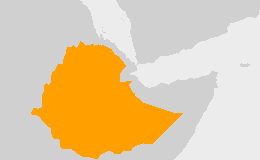
In November 2020, the Ethiopian government launched military operations in Tigray against the region’s ruling party, the Tigray People’s Liberation Front (TPLF). During the fighting, Ethiopian and allied forces from the Amhara region, and government forces from neighboring Eritrea, have committed serious abuses including massacres, arbitrary detention, widespread sexual violence, and forced displacement of ethnic Tigrayans. Since July, the government imposed an effective siege on Tigray and unlawfully detained thousands of Tigrayans throughout the country.
Tigrayan forces have also committed war crimes, including summary executions, rape, and looting of civilians in the Amhara region and Eritrean refugees in Tigray.
Between May and August 2021, the Office of the United Nations High Commissioner for Human Rights conducted investigations into the numerous and egregious abuses and violations of human rights.
The ITUC affiliate in Ethiopia is the Confederation of Ethiopian Trade Unions (CETU).
Ethiopia ratified Convention No. 87 on Freedom of Association
freedom of association
The right to form and join the trade union of one’s choosing as well as the right of unions to operate freely and carry out their activities without undue interference.
See Guide to the ITUC international trade union rights framework
and Protection of the Right to Organise (1948) in 1963 and Convention No. 98 on the Right to Organise and Collective Bargaining
collective bargaining
The process of negotiating mutually acceptable terms and conditions of employment as well as regulating industrial relations between one or more workers’ representatives, trade unions, or trade union centres on the one hand and an employer, a group of employers or one or more employers’ organisations on the other.
See collective bargaining agreement
(1949) in 1963.
Legal
Freedom of association / Right to organise
Freedom of association
The right to freedom of association is regulated by law.
Anti-Union discrimination
The law prohibits anti-union discrimination, but does not provide adequate means of protection against it.
Barriers to the establishment of organisations
- Power to refuse official registration on arbitrary, unjustified or ambiguous grounds
- Section 120 (2) of the Labour Proclamation No.1156/2019: “The Ministry or the appropriate Authority may refuse to register an association due to any one of the following grounds: (2) Where the objectives and the by law of the association are illegal (…) and (4) Where one or more of its elected leaders have been restricted from certain civil rights by court and the association is not willing to replace them.”
- Excessive representativity or minimum number of members required for the establishment of a union
- Section 114 of the Labour Proclamation No.1156/2019 requires a minimum of ten workers for a trade union to be established.
Restrictions on workers’ right to form and join organisations of their own choosing
- Restrictions on workers’ right to join the trade union of their choosing imposed by law (i.e. obligation to join a trade union of a certain level e.g. enterprise, industry and/or sector, regional and /or territorial national)
- Art. 114 (7) Labour Proclamation No. 1156/2019 stipulates that workers may not belong to more than one trade union for the same employment.
Restrictions on trade unions’ right to organise their administration
- Administrative authorities’ power to unilaterally dissolve, suspend or de-register trade union organisations
- Art.122 Labour Proclamation No. 1156/2019 gives the Ministry the right to apply to a competent court in order to dissolve a union if it considers that the unions has committed illegal acts or acts which are not in compliance with its own constitution.
Categories of workers prohibited or limited from forming or joining a union, or from holding a union office
- Others categories
- Under section3 of Labour Proclamation 1156/2019, workers whose employment relations arise out of a contract concluded for the purpose of upbringing, treatment, care, rehabilitation, education, training (other than apprenticeship); (ii) managerial employees; and (iii) workers under contract of personal service for non-profit-making purposes are excluded from the scope of application of the legislation.
- Other civil servants and public employees
- Workers in the public sector, including judges, prosecutors do not have the right to freedom of association.
Right to collective bargaining
Right to collective bargaining
The right to collective bargaining is recognised by law.
Restrictions on the principle of free and voluntary bargaining
- Exclusion of certain matters from the scope of bargaining (e.g. wages, hours)
- Sections 129 and 130 of Labour Proclamation No. 1156/2019 restrict the scope of subjects covered by collective bargaining.
Limitations or ban on collective bargaining in certain sectors
- Other civil servants and public employees
- It is unclear whether and to what extent public servants, including teachers in public schools, have the right to collective bargaining.
Right to strike
Right to strike
The right to strike is recognised by law but strictly regulated.
Barriers to lawful strike actions
- Obligation to observe an excessive quorum or to obtain an excessive majority in a ballot to call a strike
strike
The most common form of industrial action, a strike is a concerted stoppage of work by employees for a limited period of time. Can assume a wide variety of forms.
See general strike, intermittent strike, rotating strike, sit-down strike, sympathy strike, wildcat strike - Art.159(3) Labour Proclamation No. 1156/2019 states that a legal strike can only be called if the majority of the workers, in a meeting attended by at least two thirds of the trade union members, voted in favour of the strike.
- Excessively long prior notice / cooling-off period
- Art.161(1) Labour Proclamation No. 1156/2019 provides that determines that 30 days must have passed after Labour Board or Court has issued a decision in the matter before a strike notice, at least ten days in advance, may be submitted.
Limitations or ban on strikes in certain sectors
- Discretionary determination or excessively long list of “essential services
essential services
Services the interruption of which would endanger the life, personal safety or health of the whole or part of the population. Can include the hospital sector, electricity and water supply services, and air traffic control. Strikes can be restricted or even prohibited in essential services.
See Guide to the ITUC international trade union rights framework
” in which the right to strike strike The most common form of industrial action, a strike is a concerted stoppage of work by employees for a limited period of time. Can assume a wide variety of forms.
See general strike, intermittent strike, rotating strike, sit-down strike, sympathy strike, wildcat strike is prohibited or severely restricted - Under section 137(2) of Labour Proclamation 1156/2019, essential public service include: a) air transport services; b) electric power supply; c) water supply and city cleaning and sanitation services; d) urban light rail transport service e) Hospitals, Clinics, dispensaries and pharmacies; f) fire brigade services; and g) telecommunication services;
In practice
The Industrial Federation of Textile Leather and Garment Workers Trade Union (IFTLGWTU) accuses the management of Shints ETP Garments, an exporter of outdoor clothing and sportswear, of discouraging workers from joining the union.
Over a number of years, management at Shints ETP Garments built cordial industrial relations
industrial relations
The individual and collective relations and dealings between workers and employers at the workplace, as well as the institutional interaction between unions, employers and also the government.
See social dialogue
with the union at the factory at Bole Lemi industrial park in Addis Ababa. Unfortunately, recent changes have seen the introduction of union busting
union busting
Attempts by an employer to prevent the establishment of a trade union or remove an existing union, e.g. by firing union members, challenging unions in court, or by forming a yellow union.
tactics that are pushing back the gains.
Shints, which employs 4,414 workers at Bole Lemi, has stopped deducting union dues from wages. Efforts to meet the management have been unsuccessful, as they are resistant to resolving the issues raised by the union. According to the IFTLGWTU, Shints falsely claims that they are the only company in the industrial park that allows unions to recruit and organise – yet their actions show otherwise.
The union is worried that the anti-union campaign is responsible for a loss of membership, which dropped from 3,800 to 2,500. Further, it is raising concerns on health and safety, including Covid-19 prevention measures at the factory, after 60 workers, presently in quarantine, tested positive for the coronavirus.
The Confederation of Ethiopian Trade Unions indicated in its report that in 2019 they had recorded numerous attempts by employers to interfere in trade union affairs, including by withholding union dues. Cases registered included the following employers: Amaga Foam Factory; Modern Plastic Factory, Agar Security Services; Adama General Medial College, Hidase Telecom; Niyala Flour Factory; and Ahadox Food Complex.
Other companies blatantly violate the right to collective bargaining
collective bargaining
The process of negotiating mutually acceptable terms and conditions of employment as well as regulating industrial relations between one or more workers’ representatives, trade unions, or trade union centres on the one hand and an employer, a group of employers or one or more employers’ organisations on the other.
See collective bargaining agreement
by refusing to negotiate with representative unions or by delaying negotiations. Such is the case in the following entreprises: Galdi PLC; Gebison Youth Academy; Nib Transport; Nok Transport, Kaojeje Food Complex; Tina Food Factory; Hilina Food Factory; Kebrom Plastic Factory; Mentu Plastic Factory; and Orkid Business Group.
On 9 May 2019, following the merger of the Ethiopian Airways Enterprise and Ethiopian Airlines into the Ethiopian Airlines Group, workers established a single union, which was an amalgamation of the Transport and Communication Union Federations.
Since the merger, Airlines Group management has taken steps to penalise members of the union. It has been reported that management has stopped some benefits to captains who have decided to join the union. It has also written to the Ministry of Labour in an attempt to prevent the registration of the union.
Since the union was successfully registered, management of Airlines Group has consistently attempted to restrict the lawful activities of the union, including by prohibiting the union from recruiting members on the premises of the company, dismissing two pilots because of their union activities, terminating the employment of the chairperson of the union, who is a pilot, and intimidating workers to discourage them from joining the union.
In preventing the union from conducting its business and discriminating against workers for their union activities, the Airlines Group management is in clear breach of ILO
International Labour Organization
A tripartite United Nations (UN) agency established in 1919 to promote working and living conditions. The main international body charged with developing and overseeing international labour standards.
See tripartism, ITUC Guide to international trade union rights
Convention 87 on freedom of association
freedom of association
The right to form and join the trade union of one’s choosing as well as the right of unions to operate freely and carry out their activities without undue interference.
See Guide to the ITUC international trade union rights framework
.
Nine Ethiopian air traffic controllers were arrested for allegedly leading a week-long work boycott
boycott
A collective refusal to buy or use the goods or services of an employer to express disapproval with its practices. Primary boycotts are used to put direct pressure on an employer, while a secondary boycott involves the refusal to deal with a neutral employer with the view of dissuading it from patronising the target employer.
. Air traffic controllers stopped work on 25 August 2018 demanding improved working conditions, overtime pay and a salary increase.
According to the police deputy commissioner Tekolla Ayfokiru “nine workers were preventing international flights from landing at the Bole International Airport”, which is Ethiopia’s busiest hub.
The Ethiopian Civil Aviation Authority (ECAA), which is the employer, categorised the strike
strike
The most common form of industrial action, a strike is a concerted stoppage of work by employees for a limited period of time. Can assume a wide variety of forms.
See general strike, intermittent strike, rotating strike, sit-down strike, sympathy strike, wildcat strike
as illegal. The employer also stated that a salary review was ongoing.
Col. Wesenyelew Hunegnaw, the head of the ECAA, is reported to have stated: “Some of the employees engaged in the strike
strike
The most common form of industrial action, a strike is a concerted stoppage of work by employees for a limited period of time. Can assume a wide variety of forms.
See general strike, intermittent strike, rotating strike, sit-down strike, sympathy strike, wildcat strike
are returning back to their work. The remaining should submit a letter of apology and return to their work. They have until Tuesday (September 4).”
On 6 August, hundreds of thousands of protesters reportedly took to the streets in more than 200 towns and cities across Oromia, Ethiopia’s largest regional state, to demonstrate against widespread and systematic persecution by the government. According to local media reports, over 50 individuals died and thousands were arrested as police and security forces opened fire on peaceful protesters. The protests began in November 2015 when the Government introduced the Addis Ababa City Integrated Master Plan, effectively expanding the territorial limits of the capital, Addis Ababa, into neighbouring Oromo towns and villages. Oromo political leaders and activists argued that the plan, as designed, would displace millions of Oromo farmers from their ancestral lands and would threaten to eventually cleanse Oromo culture and identity from the area.
On 28 July 2014 the Sheraton Addis ordered 65 of its workers to leave the hotel immediately, and issued termination notices. Many of the workers had worked for the hotel for many years, as long as 16 years in some cases. The termination notices cited “unhealthy relations with management”, but the global union IUF, representing food, farm and hotel workers, believed the real reason was their union membership.
The union representing Sheraton Addis for many years had begun negotiating a renewal of their collective agreement. Both workers and management had agreed to let the specialised government Arbitration
arbitration
A means of resolving disputes outside the courts through the involvement of a neutral third party, which can either be a single arbitrator or an arbitration board. In non-binding arbitration, the disputing parties are free to reject the third party’s recommendation, whilst in binding arbitration they are bound by its decision. Compulsory arbitration denotes the process where arbitration is not voluntarily entered into by the parties, but is prescribed by law or decided by the authorities.
See conciliation, mediation
Board assist. Negotiations were going well, when the company unilaterally withdrew from the process. Two days later, the hotel issued termination letters to 65 employees, all of them union members, including the negotiators agreed to by management and the union’s officers. On July 31, management withdrew from the negotiations altogether after declaring that it was unwilling to negotiate with employees whose contracts had been terminated.
Teachers in public schools continue to be deprived of the right to form and join trade unions. The independent National Teachers’ Association (NTA), an Education International (EI) affiliate, was formed in 2008 after the Federal Supreme Court ruled that the name, logo, all property and bank assets of the then Ethiopian Teacher’s Association (ETA) be given to the government-recognised entity, thereby dismantling the once largely independent teacher association. The NTA was denied legal registration by the Ministry of Justice on the ground that a national teacher association already exists. The second attempt to register in February 2010 has consistently been discouraged verbally by officials of the newly created Charities and Societies Agency. However, no official notification from the Agency has been received by NTA to date. Given that it is not yet registered, NTA members do not have a guaranteed right to conduct collective bargaining
collective bargaining
The process of negotiating mutually acceptable terms and conditions of employment as well as regulating industrial relations between one or more workers’ representatives, trade unions, or trade union centres on the one hand and an employer, a group of employers or one or more employers’ organisations on the other.
See collective bargaining agreement
.
Over the years, members of the independent teachers’ association have faced harassment, dismissal, arrest, torture and even death. The Government of Ethiopia has not yet initiated steps to conduct a full and independent inquiry into allegations of trade unionists’ arrests, their torture and mistreatment when in detention.
The ILO
International Labour Organization
A tripartite United Nations (UN) agency established in 1919 to promote working and living conditions. The main international body charged with developing and overseeing international labour standards.
See tripartism, ITUC Guide to international trade union rights
has urged the government to register NTA without delay.
The government blatantly interferes in trade union affairs in all sectors, notably the banking and education sectors. Many trade union leaders are regularly intimidated and most are removed from their posts and/or forced to leave the country. The government closely monitors the Confederation of Ethiopian Trade Unions (CETU).